Heat dissipation in data centers and Bitcoin mining is a constant race against temperature. Equipment runs 24/7, generating enormous heat loads, and cooling costs directly determine operating margins. This is why adiabatic dry coolers are becoming increasingly popular. But what exactly is the core component behind them — the adiabatic precooling module — and when does it actually make sense to use one?
1. What Is an Adiabatic Precooling Module?
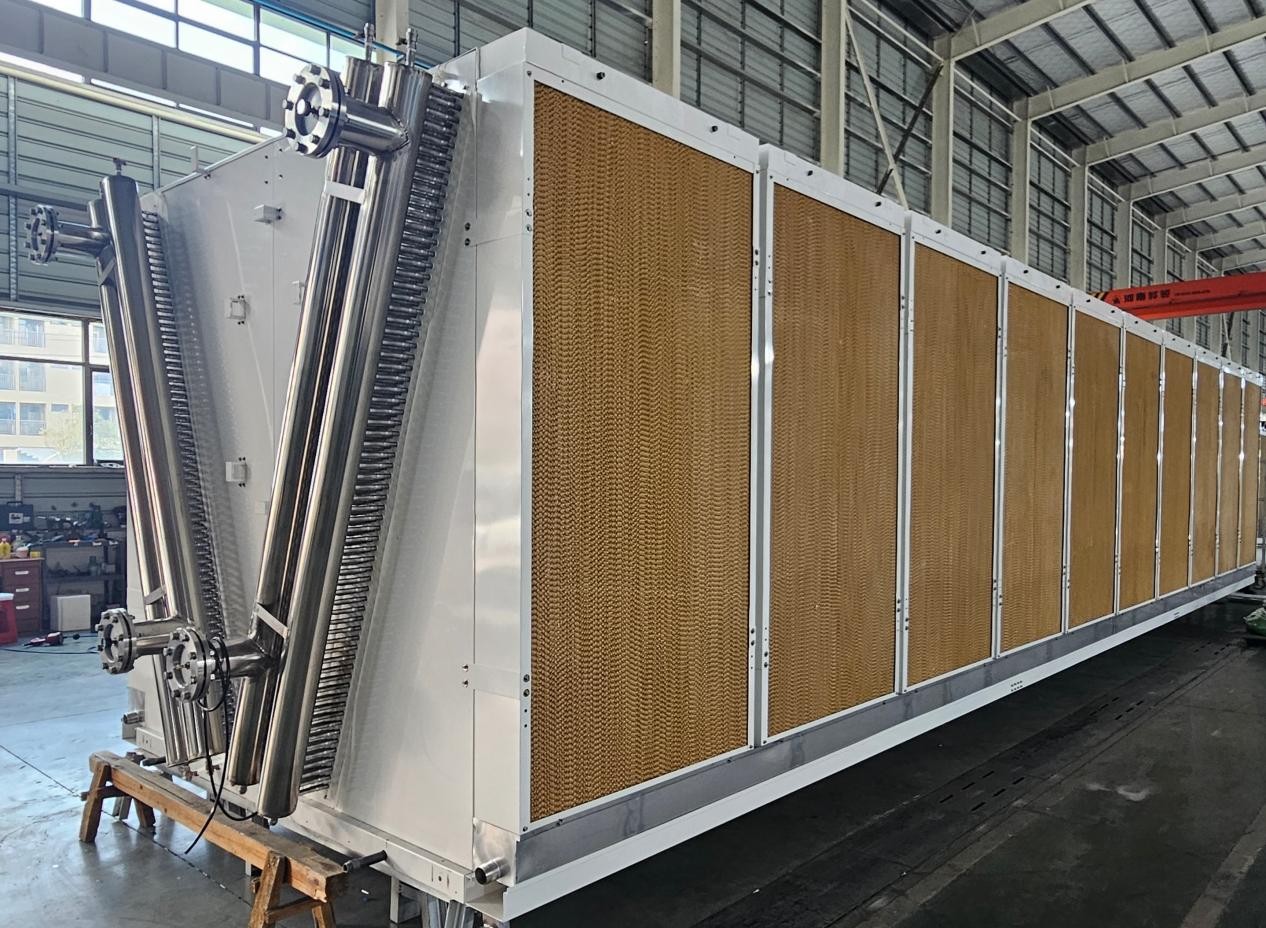
Simply put, an adiabatic precooling module is a “cooling curtain” placed in front of the dry cooler’s air inlet. The principle is straightforward: before hot ambient air reaches the dry cooler, it passes through a wet curtain or spray zone, where water evaporates and absorbs heat — naturally lowering the air temperature. This evaporative effect is what gives “adiabatic cooling” its name — adiabatic referring to a process where air temperature drops without external refrigeration.
There are two main design approaches for adiabatic precooling on the market today:
Which approach makes sense depends on the water quality, climate, and maintenance capability at the project site.
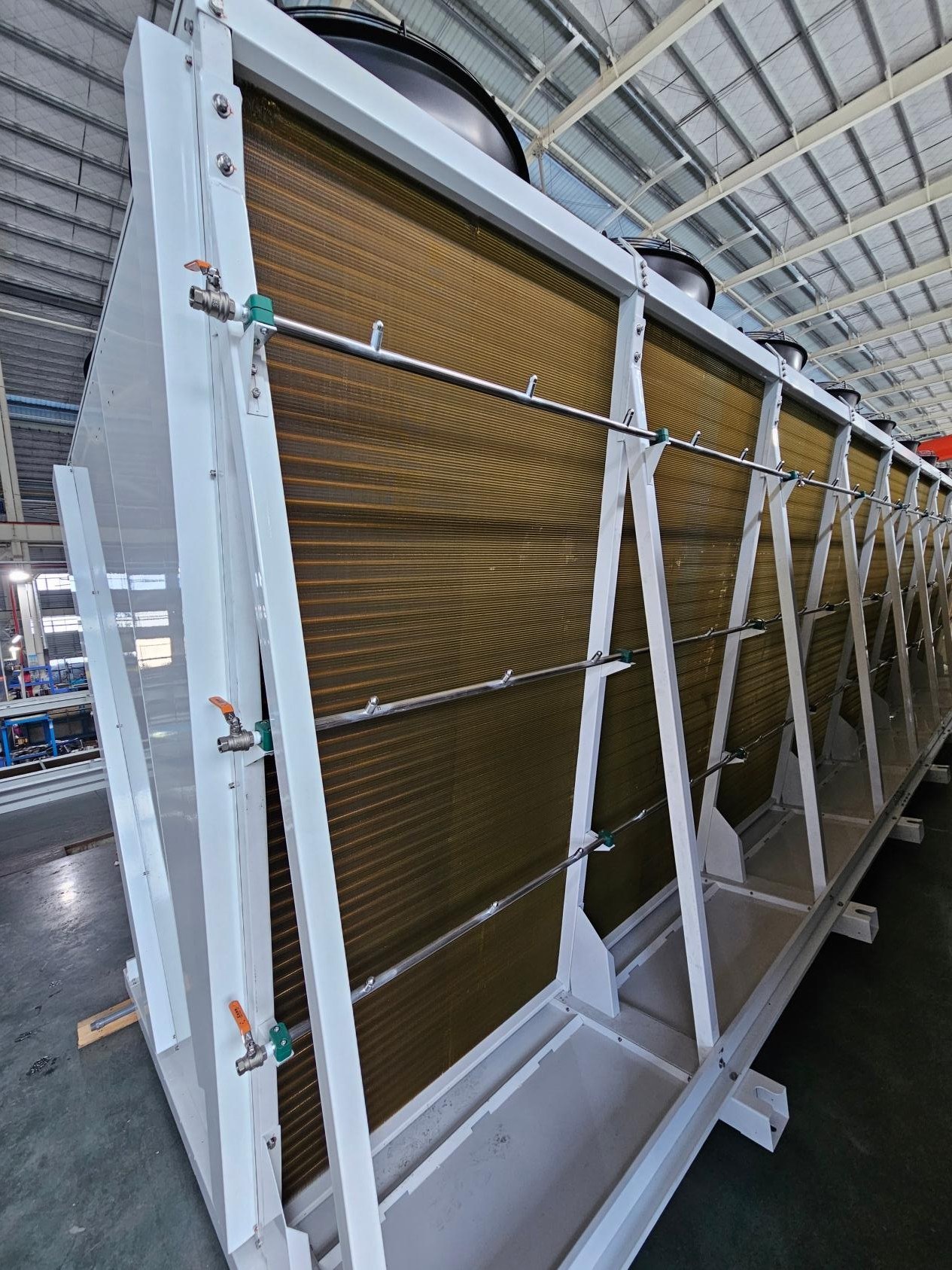
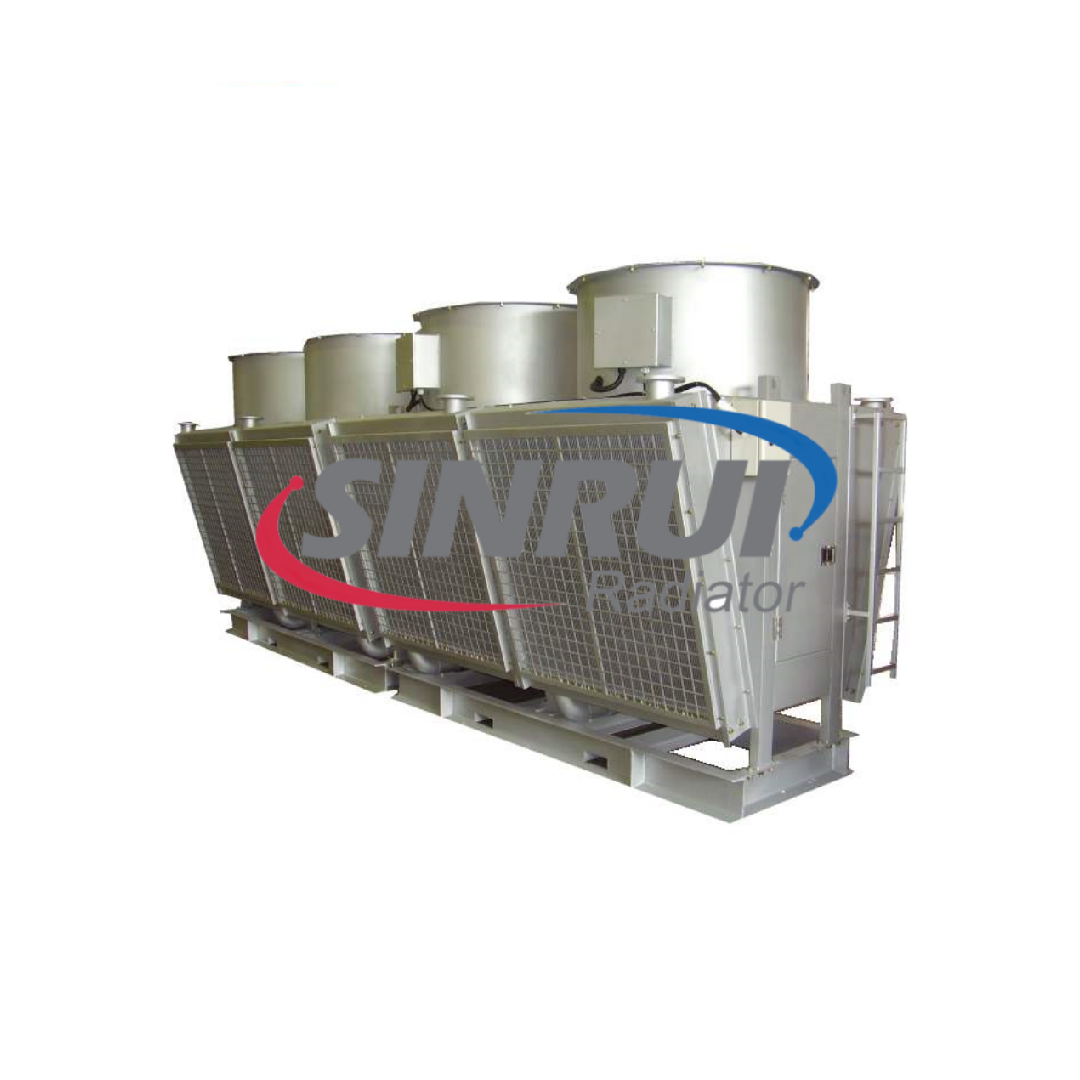
1.1 Figure 1.1 — Spray-type Adiabatic Dry CoolerInsulated Dry Cooler
2. When Should Adiabatic Precooling Be Implemented?
Adiabatic precooling isn’t standard equipment on every dry cooler — but in the right scenarios, it’s the most cost-effective performance upgrade available.
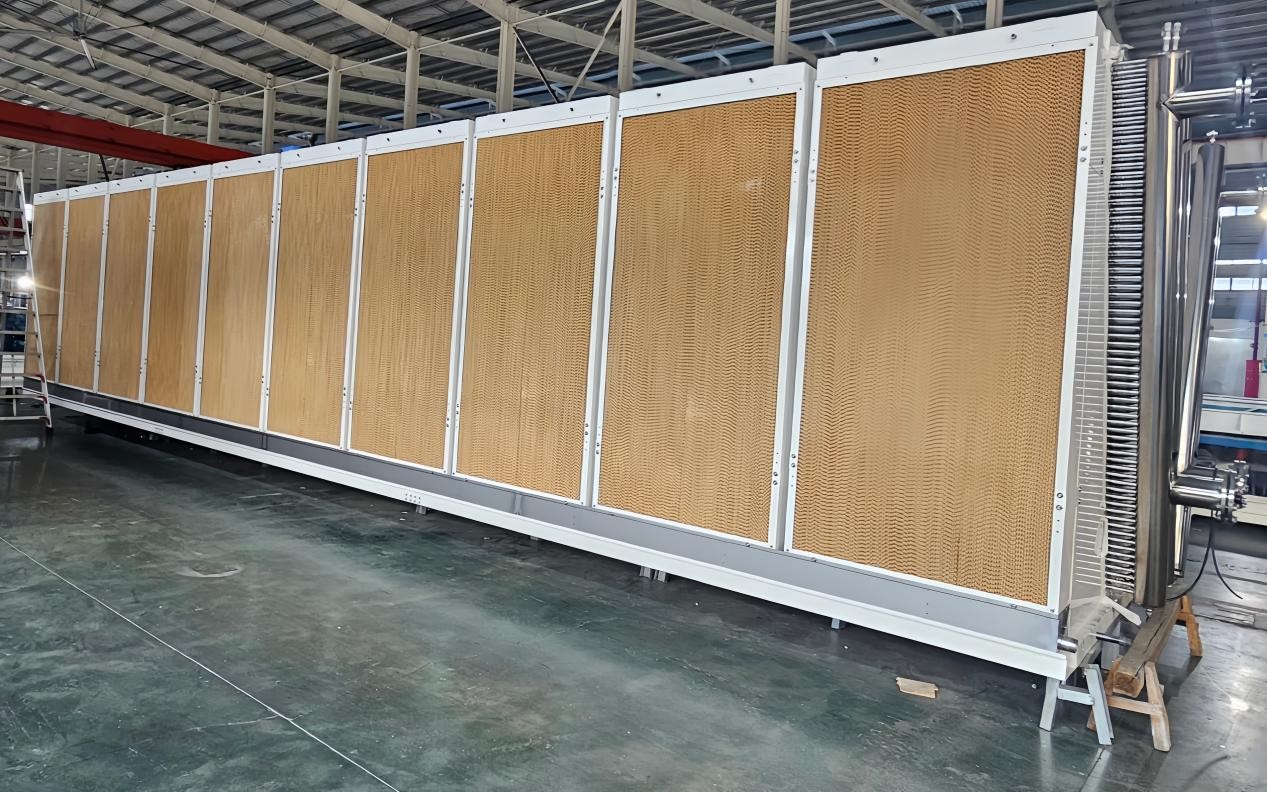
1.2 Figure 1.2 — Wet Curtain Adiabatic Dry Cooler
Scenario 1: Insufficient Heat Dissipation During High-Temperature Seasons
Dry coolers remove heat based on the temperature difference between ambient air and the cooling medium. Once ambient temperature climbs above 35℃, a dry cooler’s heat rejection capacity drops sharply, and inlet fluid temperature can exceed safe limits — forcing the system to derate or shut down. This is where the adiabatic precooling module steps in: by lowering intake air temperature by 5–8℃, it effectively restores the lost heat dissipation margin, letting the equipment keep running at full capacity even during peak summer heat.
Scenario 2: Reducing PUE and Dependence on Mechanical Cooling
Many data centers and mining farms rely on compressors or chillers for auxiliary cooling during hot periods, which drives electricity costs up sharply. Adiabatic precooling modules, by contrast, consume very little power — typically just tens to a few hundred watts to run the water pump — while letting the dry cooler operate independently for longer stretches. That reduces or even eliminates the need for mechanical cooling, helping bring PUE down to below 1.15.
Scenario 3: Limited Water Resources and Sensitivity to Water Consumption
Compared with traditional open cooling towers, adiabatic dry coolers are inherently water-saving. Wet curtain systems in particular use far less water than spray towers, and there’s no wastewater discharge beyond normal evaporation losses — a significant advantage in water-scarce regions or projects with strict environmental requirements.
3. The Radiator Core Is What Actually Determines Long-Term Reliability
Adiabatic precooling can buy you a few extra degrees of headroom, but if the radiator core itself can’t withstand corrosion or sustained high-load operation, that headroom won’t matter for long. This is why Sinrui builds adiabatic dry coolers around the radiator core first — not the precooling module.
3.1 Epoxy Resin Coated Fins: Corrosion Resistance Comes First
Radiators for data centers and mining farms are typically installed outdoors, exposed to rain, dust, and airborne sulfides or salt spray. Fin corrosion is the single biggest threat to heat dissipation performance over time. Our fins are treated with an epoxy resin coating, offering far greater salt spray resistance than conventional hydrophilic coatings. Even in harsh environments, they retain high thermal conductivity and structural integrity, with a designed service life of over 20 years.
Radiators for data centers and mining farms are typically installed outdoors, exposed to rain, dust, and airborne sulfides or salt spray. Fin corrosion is the single biggest threat to heat dissipation performance over time. Our fins are treated with an epoxy resin coating, offering far greater salt spray resistance than conventional hydrophilic coatings. Even in harsh environments, they retain high thermal conductivity and structural integrity, with a designed service life of over 20 years.
3.2 Two Precooling Designs, Matched to Your Site
We offer both the water-saving wet curtain system and the high-efficiency spray system, and recommend the right one based on your site’s water quality and climate. If a spray system requires softened water, we’ll flag it clearly at the design stage — not after installation — so it doesn’t turn into a maintenance headache later.
3.3 Delivery Capacity: Backing Up Our Commitments
Sinrui has operated its dedicated radiator manufacturing facility since 2012. That production depth translates into tangible supply reliability: 200 units delivered every month, backed by a warehouse stocked with 50 tons of copper tubing, 70 tons of stainless steel tubing, and 100 tons of fin stock, with 200 workers and 40 pieces of equipment running year-round to keep that pace. Customers don’t need “a few prototypes now and then” — they need the certainty of stable supply, all year.
3.4 Design Redundancy: Because Downtime Isn’t an Option
Our radiators are engineered with ample thermal margin — not to pad the spec sheet, but to preserve a real safety buffer under extreme conditions. For data centers running 24/7, throttling or downtime caused by insufficient cooling costs far more than the few kilowatt-hours it might save on paper. That margin is what gives customers peace of mind.
Not sure which precooling design suits your site? Contact our engineering team for a site-specific recommendation before committing to a configuration.Think of the precooling module as an amplifier for the dry cooler — it buys you cooling margin at high temperatures and extra support under extreme conditions. But that only works if the radiator core underneath it is robust enough to begin with. Sinrui’s approach starts there: corrosion-resistant fins, real production capacity, and redundant thermal design in the radiator core itself, paired with the right precooling solution for your site — a thermal management foundation built to last more than 20 years.
Choosing the right precooling design is only half the equation — the radiator core underneath it has to hold up for the long run. Talk to Sinrui’s engineering team about matching an adiabatic dry cooler to your site’s climate, water quality, and uptime requirements. Reach us at [email protected].
 Hot News
2026-09-17
2026-08-25
2026-08-20
2026-08-14
2026-08-12
2026-07-31
 EN
EN