Bitcoin mining is usually discussed in terms of electricity consumption, hashrate, and cooling cost. But the heat produced by ASIC miners is just as important.
Almost all of the electricity a miner consumes ends up as heat. Traditionally, that heat is removed and discharged into the atmosphere. With the right cooling architecture, part of it can be recovered for building heating, hot water, greenhouse heating, or industrial processes.
So, can Bitcoin mining waste heat really be reused?
Yes—but the practicality depends on the cooling method, available heat demand, temperature levels, and local climate.
In a conventional air‑cooled mining system, fans move ambient air through ASIC heat sinks. The air absorbs heat and is discharged outside.
ASIC Miner → Heat Sink → Hot Air → Ambient Air
However, recovering useful heat from hot air usually requires large airflow and extensive ductwork.
Immersion cooling offers an alternative. ASIC miners transfer heat directly to a dielectric fluid. The heated fluid then passes through a heat exchanger, which transfers the thermal energy to a secondary water or water‑glycol loop.
ASIC Miner → Dielectric Fluid → Heat Exchanger → Water/Glycol Loop
Building Heating
Recovered heat can be transferred to offices, workshops, warehouses, or other buildings through a hydronic heating system.
Hot Water
A heat exchanger can transfer thermal energy into a separate hot‑water circuit for domestic, commercial, or industrial use.
Greenhouse Heating
Greenhouses may require substantial heating during colder seasons. Mining waste heat can supplement conventional heating systems, creating a useful combination of Bitcoin mining and greenhouse heating.
Pools and Aquaculture
Swimming pools and aquaculture facilities can provide relatively stable heat demand. Liquid‑cooled mining systems are especially suitable because thermal energy can be transferred through a controlled water loop.
Industrial Applications
Mining facilities located near industrial users may use recovered heat for process‑water preheating or other low‑temperature processes.
Liquid cooling makes heat recovery easier because heat can be moved through pipes instead of large volumes of hot air.
With air cooling:
ASIC → Hot Air → Duct → Heat User
With immersion cooling:
ASIC → Dielectric Fluid → Heat Exchanger → Hot Water → Heat User
The heat exchanger transfers thermal energy between two separate circuits while keeping the fluids isolated. This lets the mining cooling loop connect to heating, hot‑water, or industrial systems without the fluids mixing.
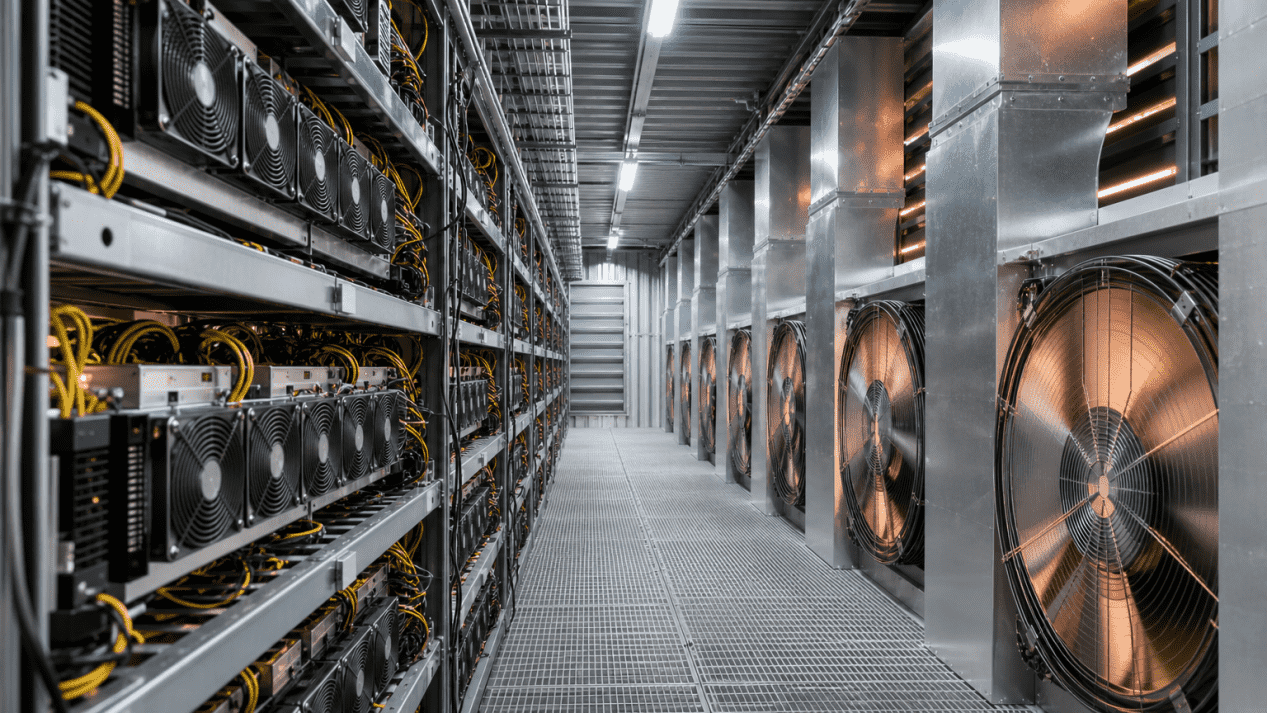
Bitcoin mining racks with cooling fans and ducted airflow removing heat from ASIC miners.
This is often overlooked.
Bitcoin miners may run continuously, but heat demand does not. A greenhouse needs less heat in summer, a building has limited heating demand in warm weather, and a hot‑water system eventually reaches its target temperature.
The miners, however, keep generating heat.
That excess heat still has to be rejected.
This is where a radiator or dry cooler becomes important.
When useful heat demand is available:
Mining → Heat Exchanger → Heat User
When heat demand is insufficient:
Mining → Heat Exchanger → Radiator/Dry Cooler → Ambient Air
Therefore, heat recovery does not necessarily eliminate the need for heat‑rejection equipment. Heat recovery and heat rejection can work together.
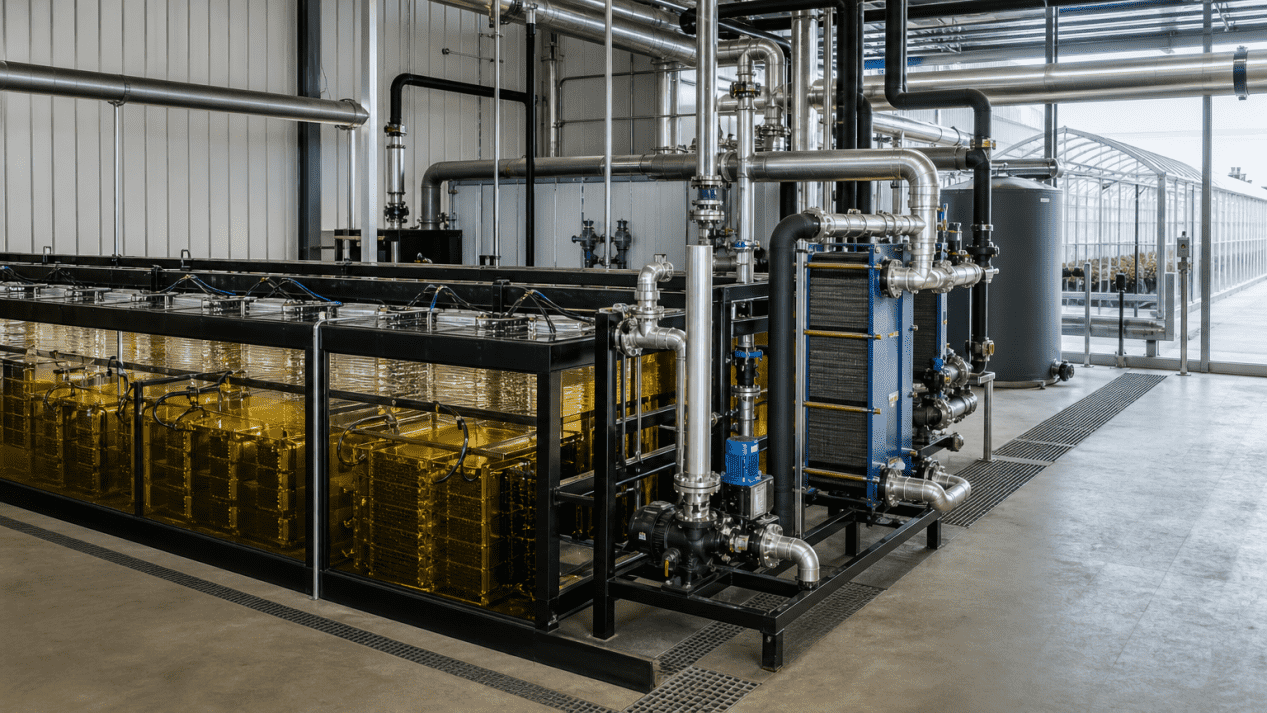
Immersion‑cooled mining infrastructure transferring waste heat through a heat exchanger loop.
For a mining cooling system, the radiator or dry cooler should be selected according to actual operating conditions.
Important parameters include:
Ambient temperature is particularly important in hot‑climate mining facilities.
A radiator designed for a 25°C ambient environment cannot be expected to deliver the same performance at 40°C or 50°C. As ambient temperature rises, the temperature difference available for heat transfer shrinks, which may call for more heat‑transfer surface area or airflow.
For desert mining sites, dust and sand can also affect airflow and heat‑transfer performance. Coastal locations may require additional corrosion protection because of salt‑laden air.
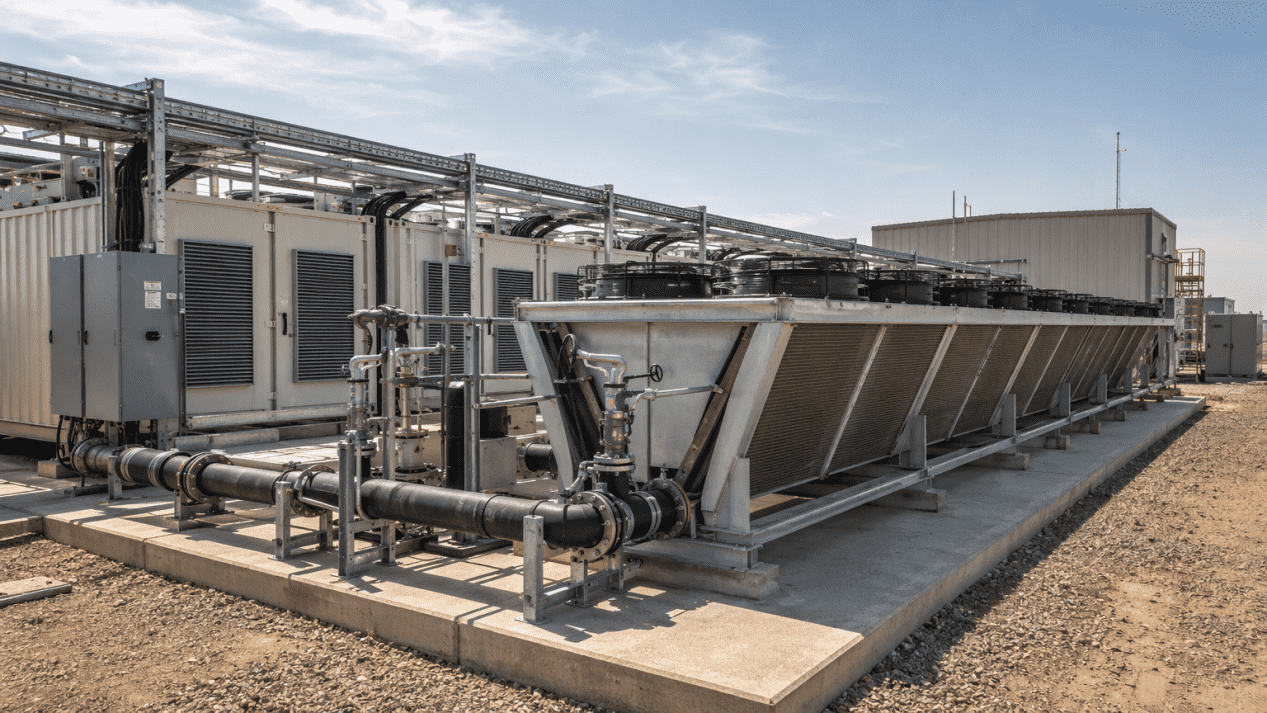
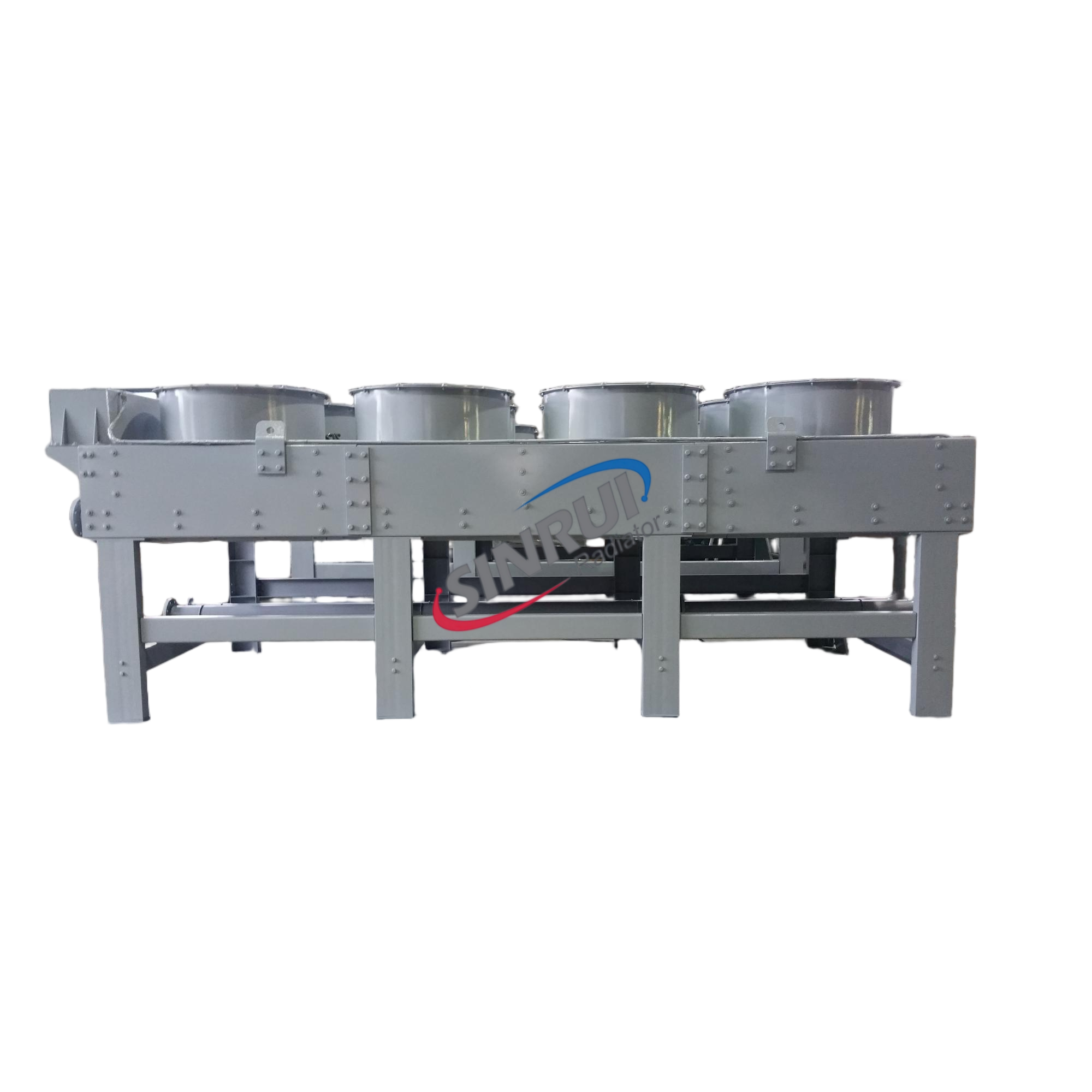
Industrial dry coolers with axial fans and water‑glycol piping operating beside containerized Bitcoin mining units for excess heat rejection.
A practical system may combine:
ASIC Miners → Immersion Cooling → Heat Exchanger → Secondary Water/Glycol Loop → Building / Greenhouse / Hot Water → Excess Heat → Radiator / Dry Cooler → Ambient Air
The heat user absorbs the thermal energy it needs. When demand decreases, the radiator or dry cooler rejects the remaining heat.
This provides flexibility while keeping cooling reliable for continuous mining operation.
Not necessarily.
Technical feasibility does not automatically mean economic feasibility. Project designers should evaluate heat demand, temperature requirements, distance to the heat consumer, operating hours, local climate, and existing infrastructure.
A mining farm in a cold climate may have strong demand for building or greenhouse heating. A facility in a hot desert environment may have little heating demand and may need heat rejection throughout most of the year.
The goal is therefore not simply to recover as much heat as possible.
It is to recover useful heat when demand exists and reliably reject excess heat when it does not.
Bitcoin mining converts large amounts of electrical energy into computing power—and ultimately, heat.
With immersion cooling, heat exchangers, radiators, and dry coolers, that thermal energy can potentially be recovered for heating, hot water, agriculture, and industrial applications.
The future of mining cooling may not be about simply getting rid of heat. It may be about building flexible systems that reuse valuable thermal energy while still rejecting excess heat reliably.
For mining operators and cooling‑system integrators, proper radiator and heat exchanger engineering is an essential part of that solution.
How much heat can we reuse—and how reliably can we reject the rest?
For more practical articles on dry coolers, radiators, and heat exchangers for mining, data center, and power generation cooling, follow the Sinrui Radiator LinkedIn page. We share technical articles and cooling‑system updates for engineers, operators, and project teams.
 Hot News
2026-09-28
2026-09-27
2026-09-23
2026-09-17
2026-08-25
2026-08-20
 EN
EN