The structural reasons why a two‑year service life is not a defect — it is a design limitation.
In mining and heavy engineering operations, OEM folded‑core radiators frequently develop widespread leaks before the two‑year mark — and in some cases within months of installation. Fleet managers tend to attribute this to harsh conditions. The engineering explanation is more specific: the folded‑core structure has inherent limitations that make it unsuitable for sustained mining use, regardless of the OEM badge on the side.
This article breaks down the three failure mechanisms, explains why removable copper tube radiators address each of them structurally, and summarizes the experience of one Chilean mining operation that replaced its entire fleet.
Folded‑core radiators are selected by OEMs for their low manufacturing cost and high heat dissipation density. In standard industrial environments, these trade‑offs are acceptable. In mining, three failure mechanisms consistently shorten their service life:
Vibration‑induced fatigue cracking: Folded‑core structures depend on rigid connections: thousands of cooling fins welded tightly to the tubes. Mining equipment generates sustained, high‑frequency vibration. Without any cushioning mechanism, mechanical stress concentrates at weld points and tube elbows — the exact locations where fatigue cracks initiate. Once a crack forms, coolant loss follows. The entire unit is compromised.
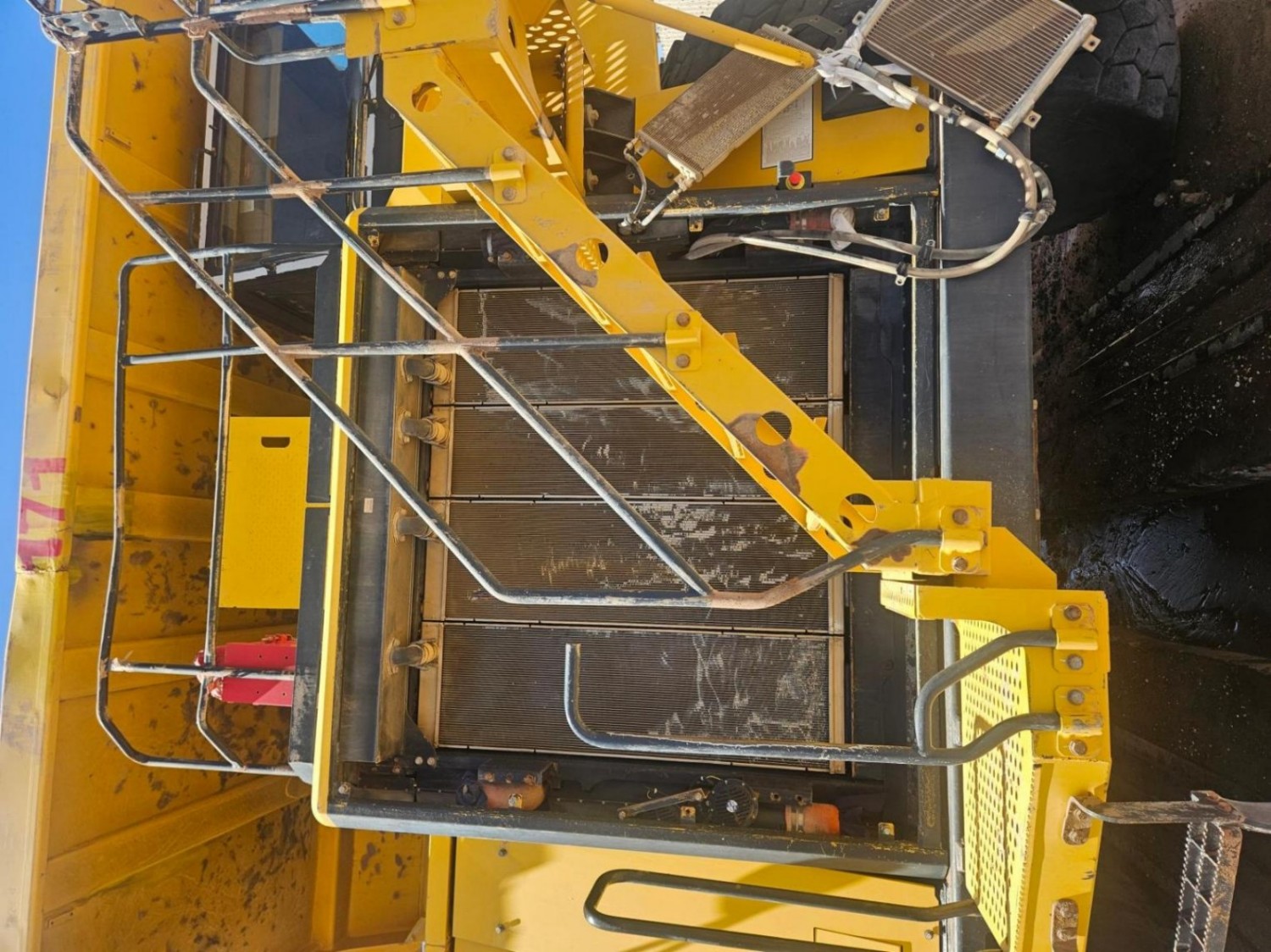
Close‑up of folded‑core radiator showing fatigue cracking at weld joints or tube elbows
Irreversible dust clogging: The internal channels of a folded‑core radiator are narrow by design — this is part of what makes them thermally efficient. In dusty mining environments, fine particulate penetrates deep into the fin structure. Standard high‑pressure water cleaning cannot reach or dislodge it. Long‑term accumulation causes a progressive drop in cooling efficiency that typically cannot be reversed without specialist equipment. Overheating follows.
No field repair path: Because the structure is fully integrated, a localized leak cannot be addressed on‑site. There is no welding fix that holds reliably under operating pressure and vibration. The practical outcome: replace the entire assembly. In a remote mine site, that means raising a purchase order, waiting for international shipping, and keeping a machine out of rotation until the part arrives.
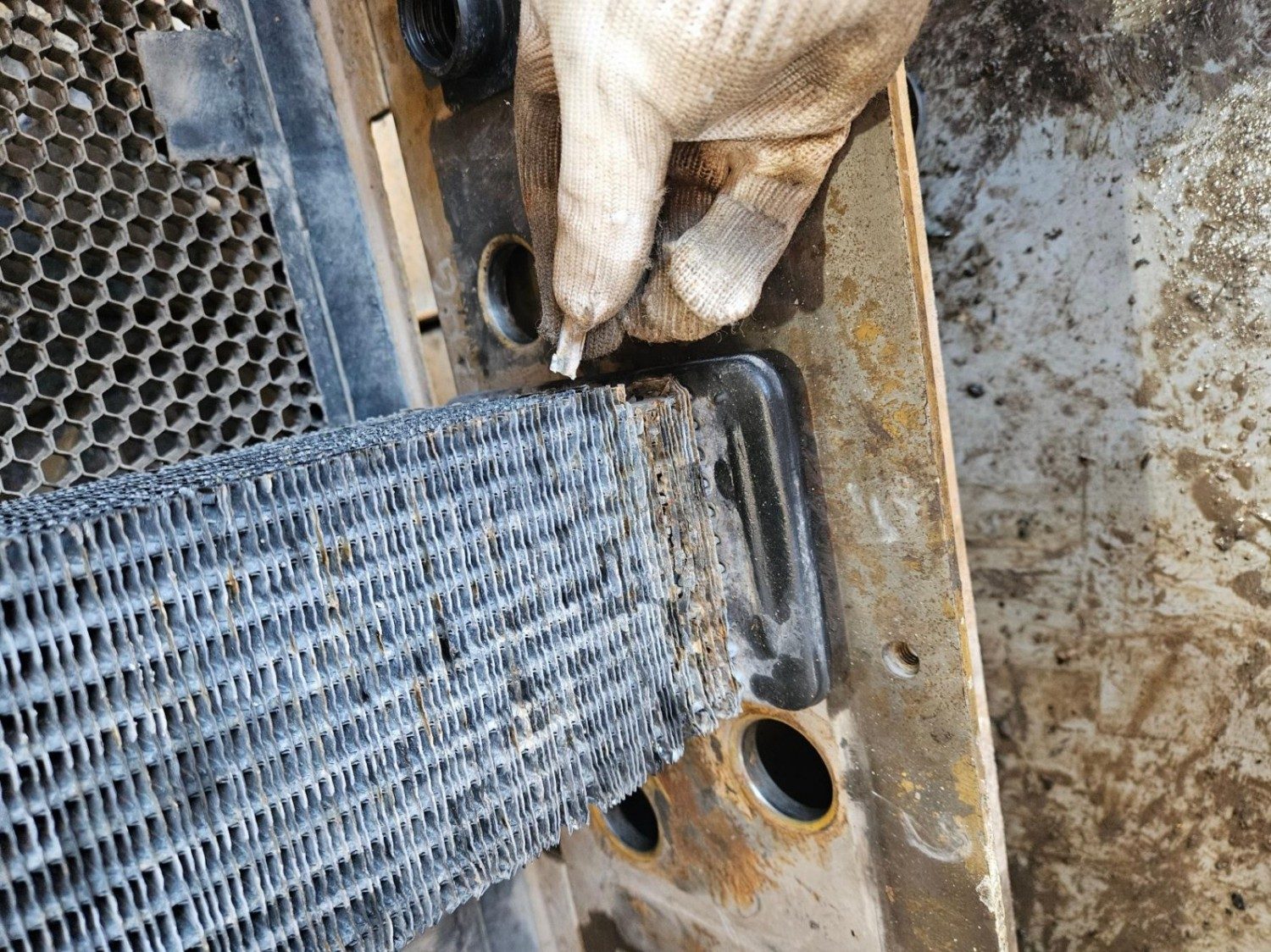
Damaged folded‑core radiator removed from service showing clogging, corrosion, or structural failure
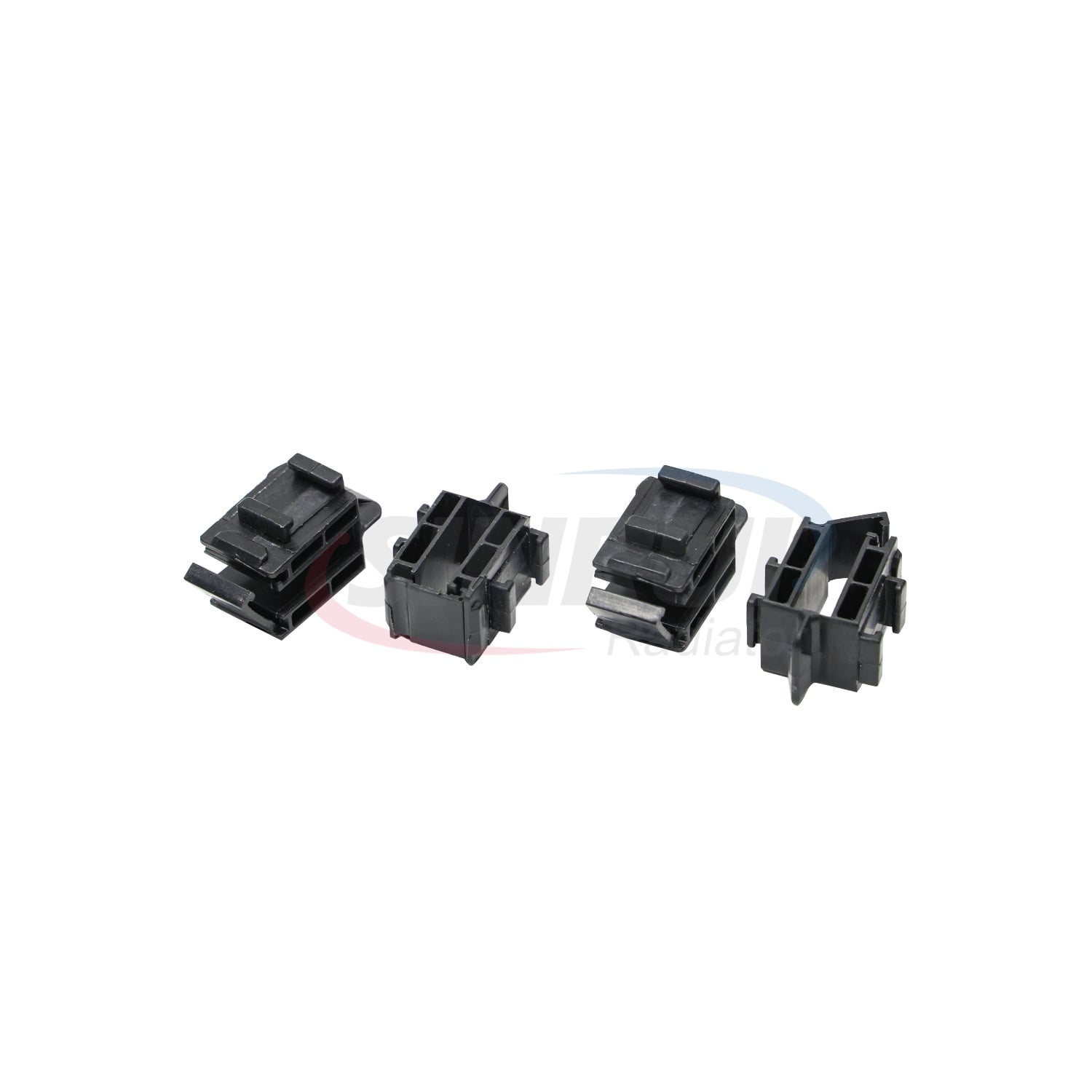
The removable copper tube design — in which independent copper tubes are held in header plates by flexible FKM (fluoroelastomer) rubber seals rather than welded in place — was developed specifically to solve the three problems above.
Vibration absorption: Because the tubes are not rigidly bonded to the header, the assembly has inherent flexibility. The FKM seals act as buffers, absorbing mechanical energy from vibration rather than transmitting it to the tube‑to‑header interface. The concentrated stress that causes fatigue cracking in a welded structure is distributed and dissipated before it reaches a critical threshold.
Full cleanability: Open copper tube passages — wider than folded‑core channels by design — can be cleared with high‑pressure water or air jets without disassembly. Dust and particulate that accumulates during operation can be fully removed during scheduled maintenance. Cooling efficiency is restored, not managed around.
Field repair without downtime: If a rock impact punctures a single tube, maintenance personnel remove the damaged tube and install a replacement on‑site — the same process, the same tools, as removing and reinstalling any cylindrical component. No welding. No full‑unit disassembly. Downtime measured in hours, not days or weeks.
Material durability: Sinrui specifies 99.9% high‑purity oxygen‑free copper for all tube cores. Where operating conditions require it — chemically active environments, coastal exposure, extreme humidity — electrophoretic PTFE coating and C5M‑grade anti‑corrosion treatment can be applied. In comparative field conditions, copper tube assemblies with these treatments have demonstrated service lives of five to six times those of standard folded‑core units.
If a flying rock punctures a copper tube on‑site, maintenance personnel can pull out the damaged tube and install a new one in minutes — much like replacing a single battery in a battery pack. The rest of the radiator keeps running.
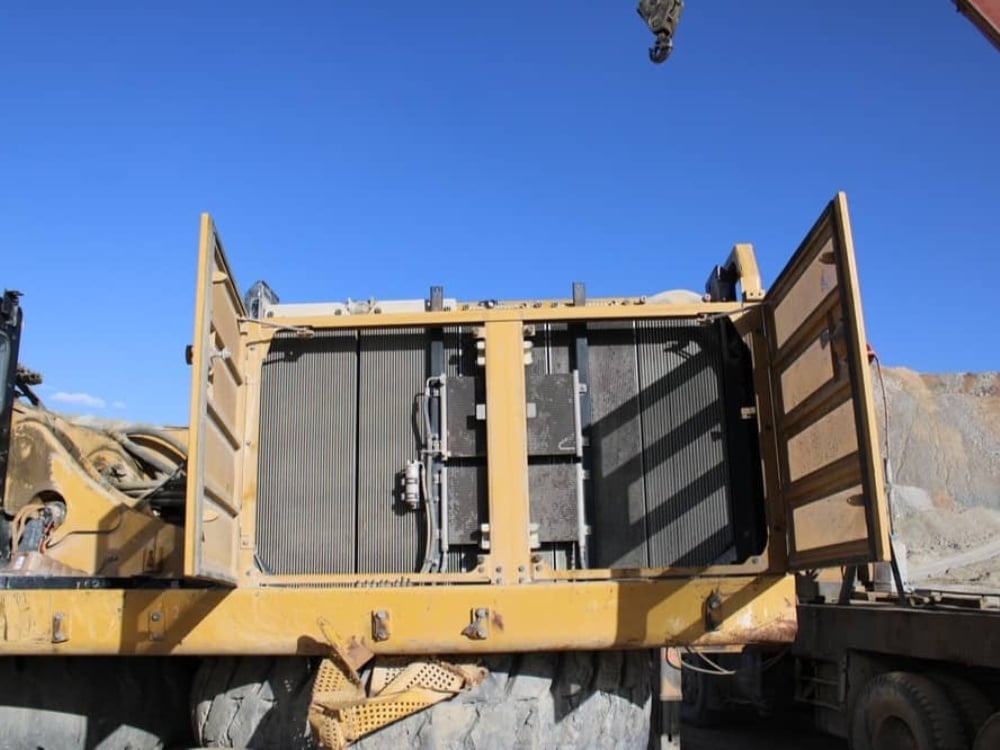
A large mining operation in Chile recently completed a fleet‑wide transition from OEM folded‑core and aluminum plate‑fin radiators to Sinrui removable copper tube assemblies. The decision followed a sustained period of recurring unit failures that required full replacement — each incident carrying the combined cost of the replacement assembly, international air freight, and the lost production during the wait.
The specific problems the operation was managing:
Following the upgrade, the operation standardized its entire fleet on the removable tube system. Field maintenance teams can now address individual tube failures on‑site, within the shift, without the machine leaving service. Cooling system maintenance — previously a supply chain problem — became an in‑house capability.
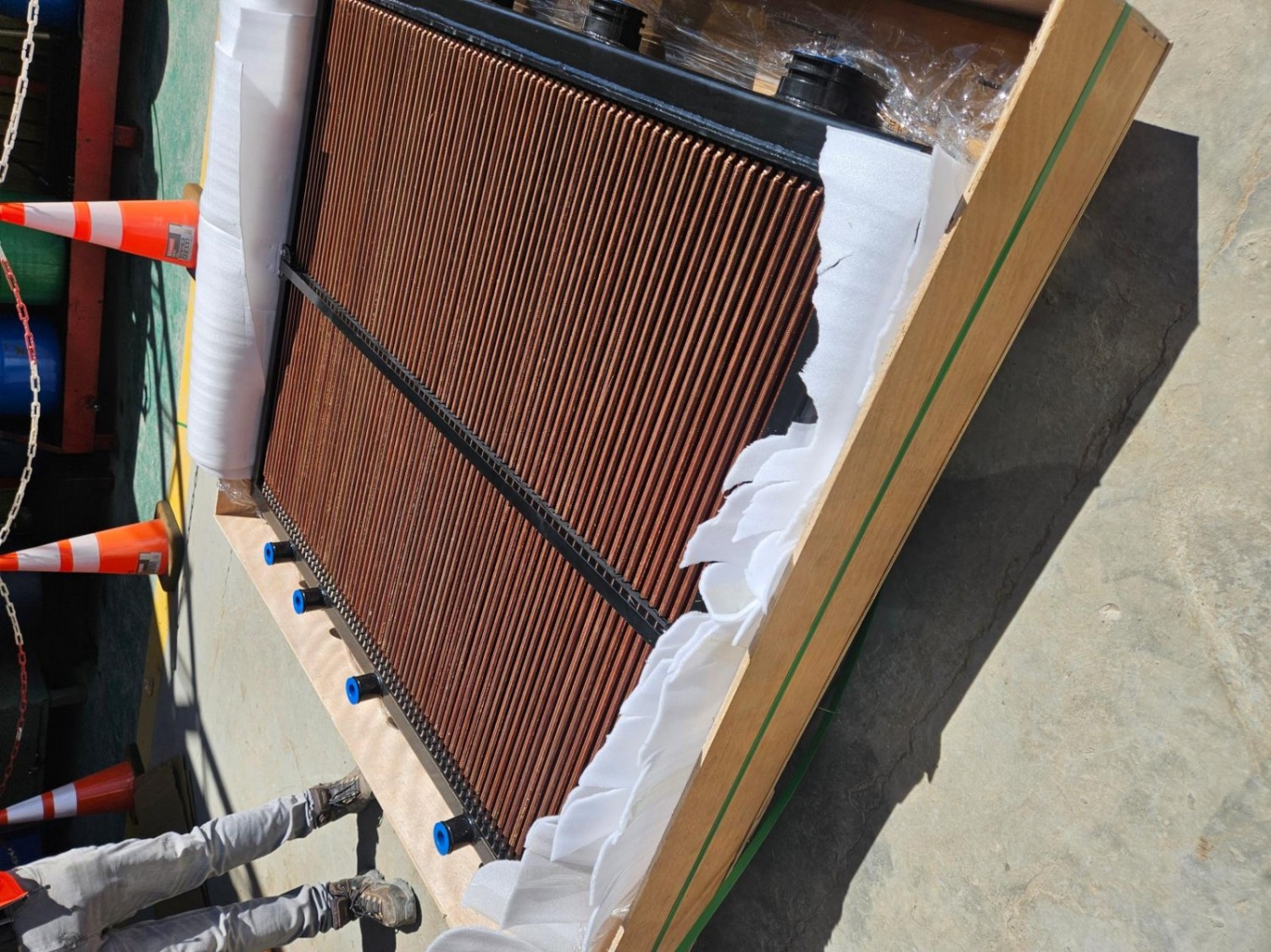
[IMAGE: Sinrui copper tube radiator product detail — showing tube arrangement, FKM seals, and header plate construction]
The acquisition price of an OEM folded‑core radiator is lower. The total cost of ownership — across a typical service period in a demanding mining environment — is not.
| OEM Folded‑Core Radiator | Sinrui Removable Copper Tube Radiator |
|---|---|
| Low unit purchase price | Higher initial investment — recovered within the first replacement cycle avoided |
| Rigid welded structure — stress concentrates at weld points under vibration | FKM floating seal — vibration energy absorbed and dissipated, not transmitted |
| Narrow fin channels — deep dust clogging is not reversible with pressure washing | Open copper tube structure — fully cleanable with high‑pressure water or air |
| One localized leak = full unit replacement | One damaged tube = one tube replaced, on‑site, in minutes |
| High replacement frequency in demanding conditions | Field‑documented service life of 5–6x conventional alternatives in comparable environments |
The cost differential that matters most is not the unit price gap. It is the cumulative cost of repeated replacement cycles: the assembly, the freight, the downtime while waiting. Each avoidable replacement event carries costs that typically exceed the price difference between the two systems many times over.
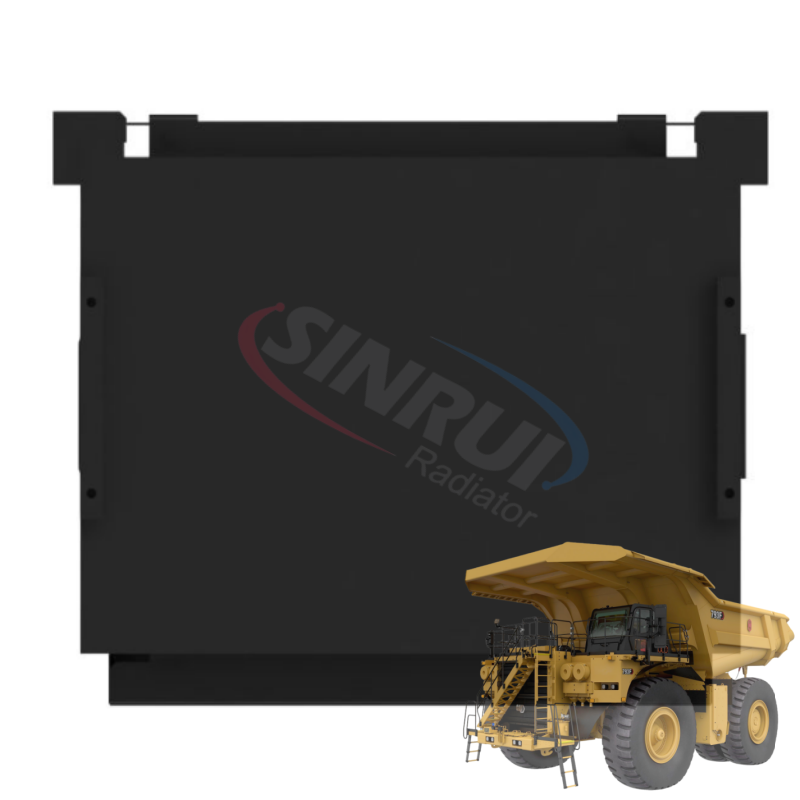
Sinrui removable copper tube radiators are manufactured as direct‑fit replacements for Caterpillar and Komatsu platforms. Dimensional compatibility is confirmed before supply. Where required, Sinrui engineers can specify higher‑redundancy designs for applications that push standard equipment beyond its design envelope.
The cooling system does not have to be the operational bottleneck it currently is for many mining fleets. In most cases, one design change resolves three separate failure modes simultaneously.
For direct‑fit specifications, technical comparison data, or to discuss a fleet upgrade programme, contact our engineering team: 📧 [email protected]
Stay ahead of cooling system failures — follow Sinrui Radiator on LinkedIn for field insights, maintenance guides, and real‑world case studies from mining operations worldwide.
 Hot News
2026-09-28
2026-09-27
2026-09-23
2026-09-17
2026-08-25
2026-08-20
 EN
EN