In mining and heavy‑duty operations, one maintenance rule is treated as an absolute red line: never open the radiator cap while the engine is hot. This is not merely a precaution against burns. It is a response to a specific thermodynamic event — one that can turn a pressurized cooling system into a projectile hazard within microseconds.
Understanding why this happens requires a brief look at the physics governing pressurized cooling systems.
The Physics Behind Flash Evaporation in Mining Cooling Systems
Industrial engine cooling systems are not designed to run at standard atmospheric pressure. Pressurization serves two engineering purposes: it raises the boiling point of the coolant, extending the thermal operating range of the system, and it suppresses pump cavitation — a failure mode in which vapor bubbles form inside the pump and cause erosion damage over time.
In mining trucks and excavators, radiator caps are fitted with precision spring‑loaded pressure valves. These valves maintain internal system pressure typically between 15 and 50 PSI, depending on the equipment. As a result, the coolant — which would boil at 100°C (212°F) at atmospheric pressure — remains in a stable liquid state even when its actual temperature reaches 120°C to 130°C (248°F to 266°F).
In thermodynamic terms, this is a superheated liquid state: the coolant is held in the liquid phase not because its temperature is below the boiling point, but because the surrounding pressure is artificially elevated above the point at which vaporization would otherwise occur.
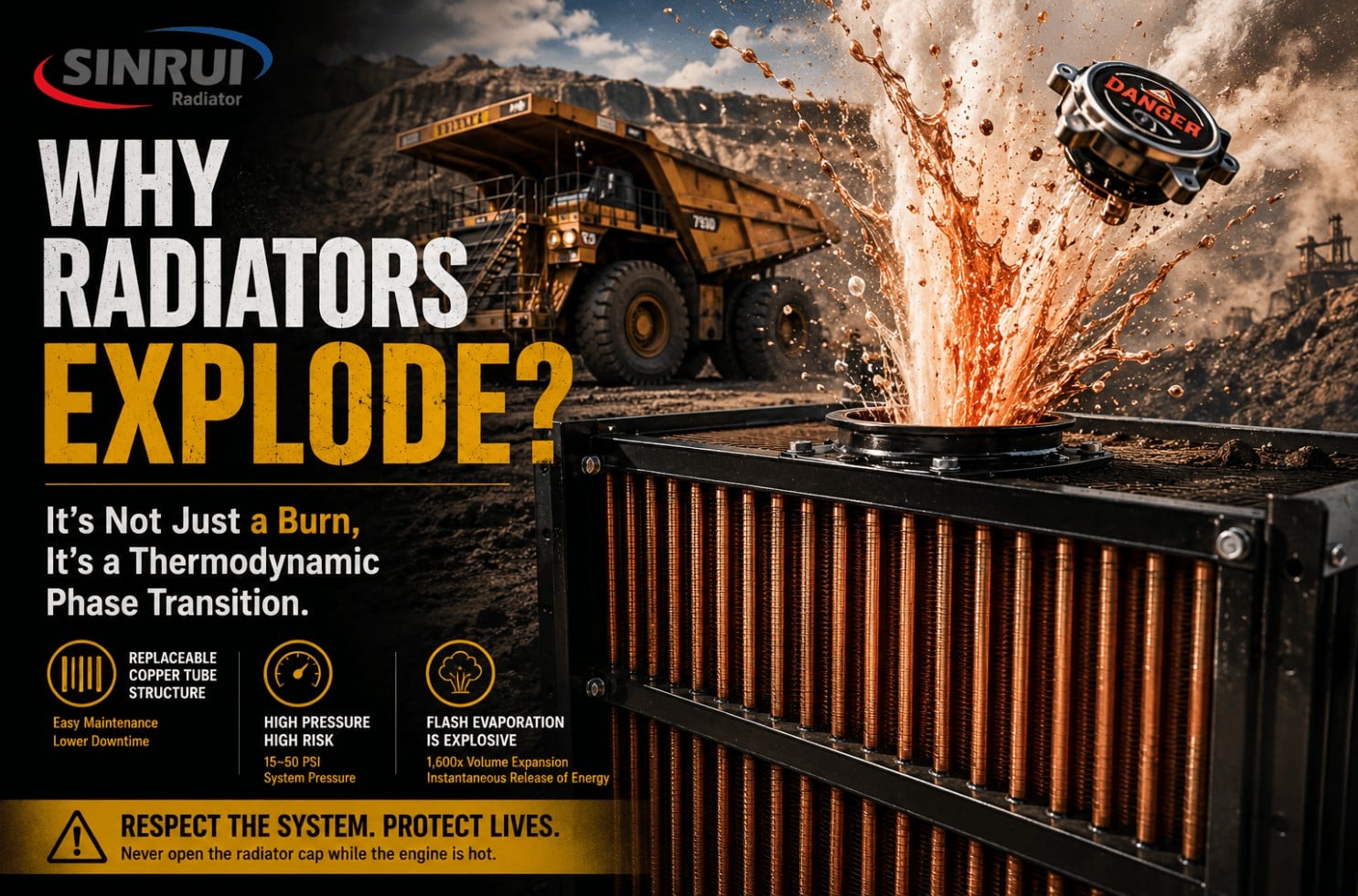
When a technician removes the radiator cap on a hot, pressurized system, the equilibrium described above collapses instantaneously.
The sequence of events occurs in three rapid stages:
· Pressure drop: System pressure drops from its operating level to ambient atmospheric pressure within microseconds.
· Phase transition: At the new, lower pressure, the coolant's actual temperature is now well above its boiling point. The excess thermal energy immediately drives a transition from liquid to vapor.
· Volumetric expansion: Water vapor occupies approximately 1,600 times the volume of liquid water. The rapid phase change generates a violent volumetric expansion — effectively, an explosion of steam and superheated coolant.
This process is known in engineering as flash evaporation — a sudden, uncontrolled phase transition caused by a rapid drop in pressure. The resulting force is sufficient to eject the radiator cap, spray high‑temperature coolant, and cause severe burns or equipment damage to anyone in the immediate area.
The same physical process occurs in any pressurized cooling system. However, several factors specific to mining equipment significantly increase the severity of potential outcomes.
System volume
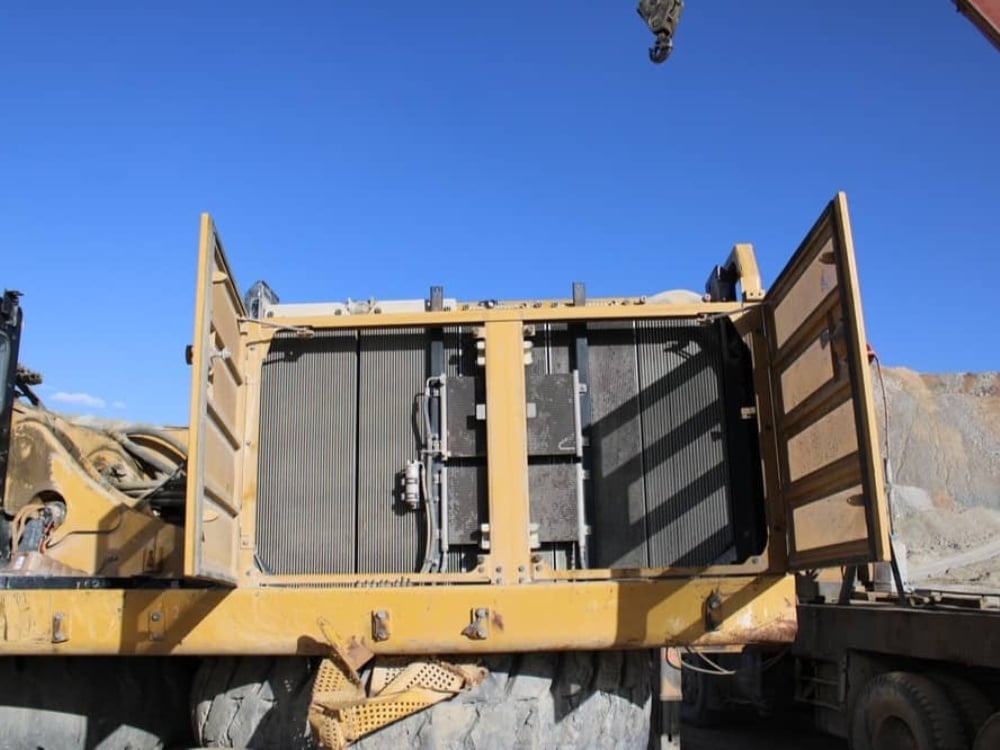
A large hydraulic shovel can hold 400 to 800 liters of coolant. A heavy‑duty mining truck typically carries 100 to 200 liters. The total energy stored in a superheated, pressurized system scales with volume — the larger the coolant capacity, the greater the force released during flash evaporation.
Operating environment
Mining sites are characterized by high ambient temperatures, heavy vibration, and elevated dust levels. These conditions place continuous stress on sealing components throughout the cooling circuit. Seals that have degraded under these conditions are more likely to fail abruptly when pressure is released, rather than providing a controlled bleed.
Physical impact
The instantaneous pressure release can generate enough kinetic energy to turn a heavy metal radiator cap into a projectile. Surrounding pipework, brackets, and connection points are also at risk of damage if a sudden pressure release causes localized overstress at already‑fatigued joints.
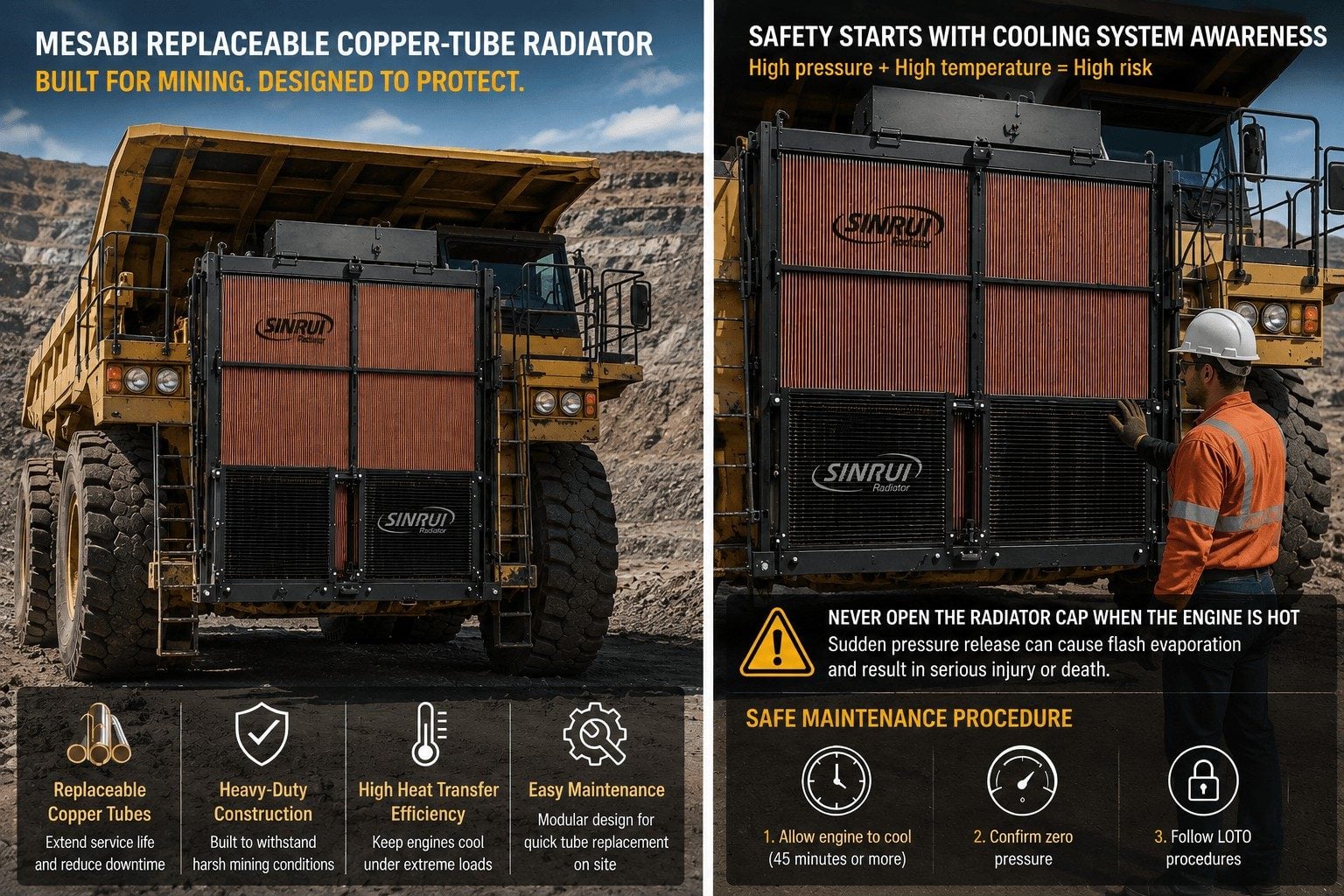
The following procedures are recommended by the Sinrui engineering team for any maintenance work involving pressurized cooling circuits:
A cooling system failure in a mining environment is rarely a minor event. The combination of high volume, sustained pressure, and extreme operating temperatures means that a single procedural error can result in serious injury or significant equipment damage. The physics are unforgiving — the protocol exists because of them.
Sinrui manufactures heavy‑duty cooling cores rated to 150 PSI for mining, power generation, and offshore applications. Our engineering team provides technical support on system pressure specifications, coolant selection, and maintenance protocols for high‑duty‑cycle fleets.
Contact us:
📞 +86 15684211561
🌐 www.miningradiator.com
 Hot News
2026-10-12
2026-09-28
2026-09-27
2026-09-23
2026-09-17
2026-08-25
 EN
EN