After three years of operation, a dry cooler's heat rejection capacity can drop by 30% — not because of aging, but because of an invisible “silent killer” slowly robbing its performance. That killer is fin fouling.
Dry coolers rely on air flowing across the fins to reject heat. But the air carries three kinds of enemies:
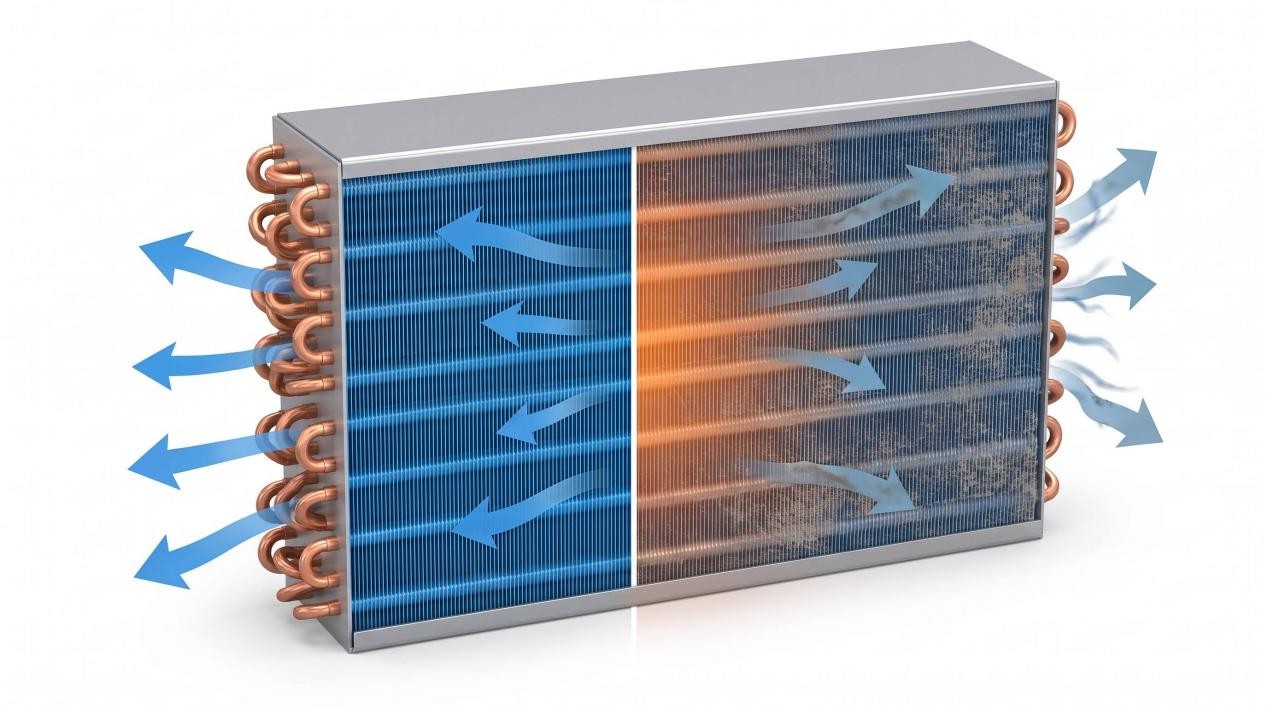
Cross-section diagram comparing clean fins with airflow to fouled fins with blocked airflow
The damage is twofold.
Together, these two effects can push inlet coolant temperature up by 5–10°C, forcing the unit to derate or even shut down.
Even more dangerous is corrosion: fouling absorbs moisture and creates localized acidic or alkaline micro-environments that accelerate fin perforation. Many dry coolers are scrapped without ever “breaking down” — they simply rot away, fin by fin. We cover this corrosion mechanism in more depth in our guide on radiator corrosion issues in mining applications.
Spend 10 minutes per month and run this 4-step check:
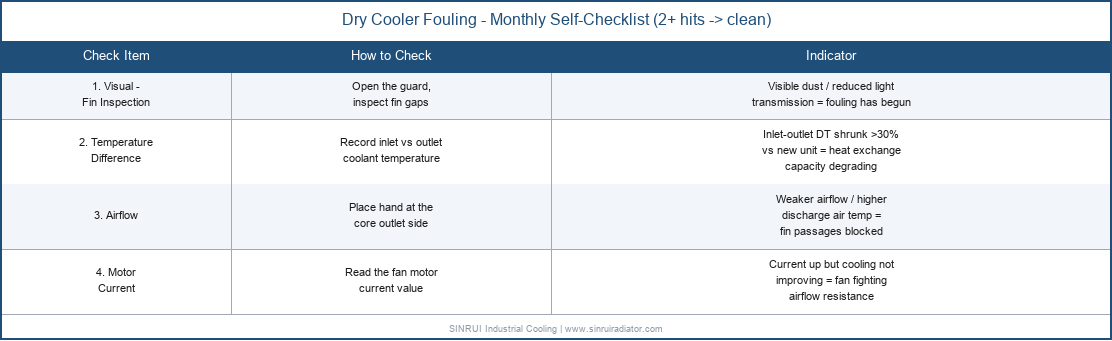
Dry Cooler Fouling Monthly Self-Checklist covering visual inspection, temperature difference, airflow, and motor current
If two or more items hit, fouling is already stealing efficiency — schedule cleaning immediately.
Regular cleaning: High-pressure water plus a dedicated cleaner. Quarterly is recommended; monthly in heavily polluted environments. For the specific step-by-step cleaning process — including how to clean coils without taking the unit offline — see our detailed guide:How to Clean Dry Cooler Coils Without Shutdown.
Choose the right coating: Fin surface treatment determines how strongly fouling adheres. SINRUI dry coolers use epoxy-resin-coated fins — a smooth, dense surface that resists fouling and salt-spray corrosion, with a design life of over 20 years — extending cleaning intervals several times over conventional hydrophilic coatings.
For a broader maintenance routine beyond fouling alone, see our guide on maintenance requirements of industrial dry coolers.
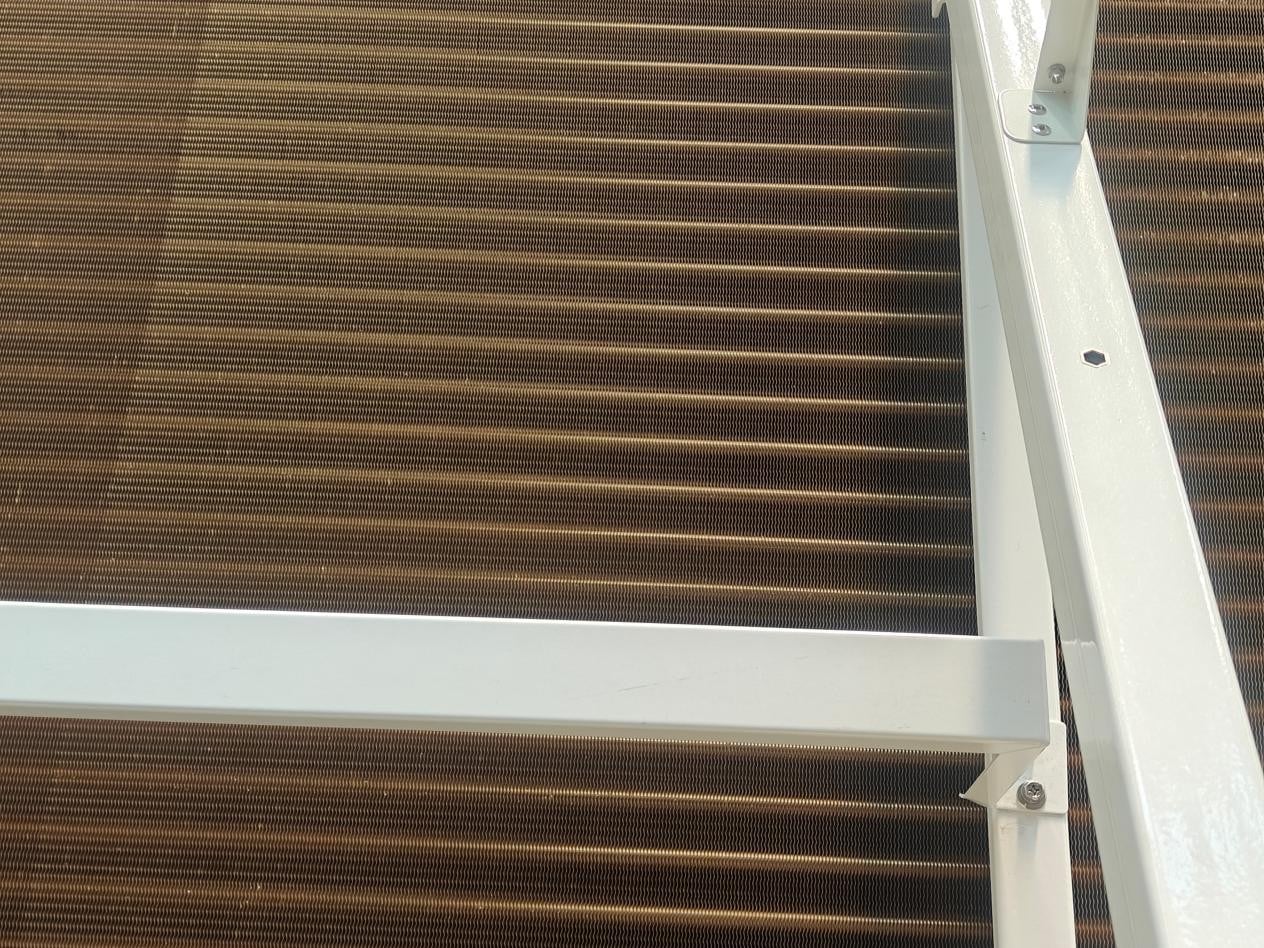
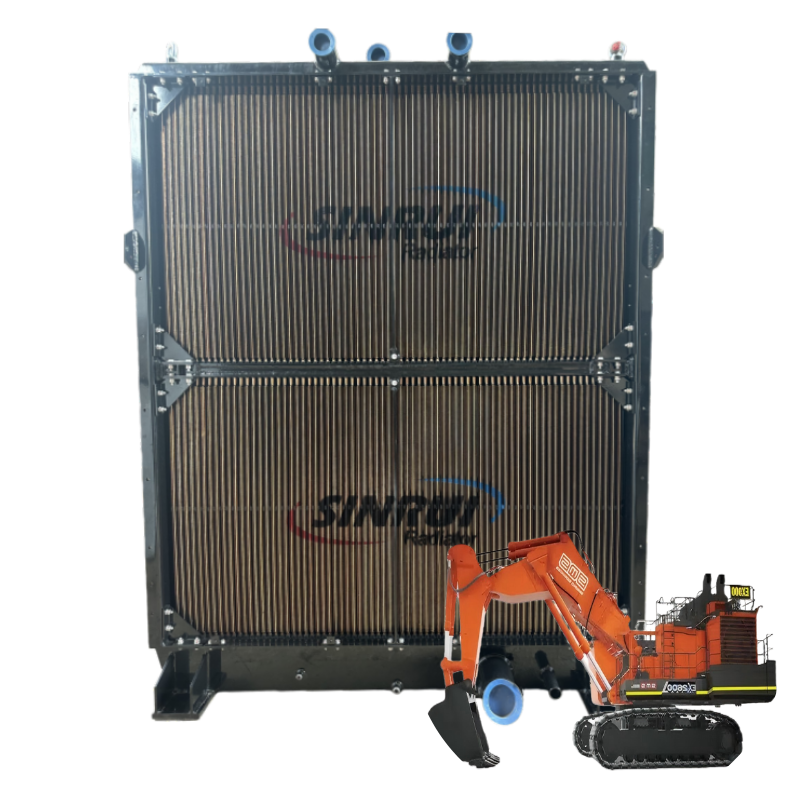
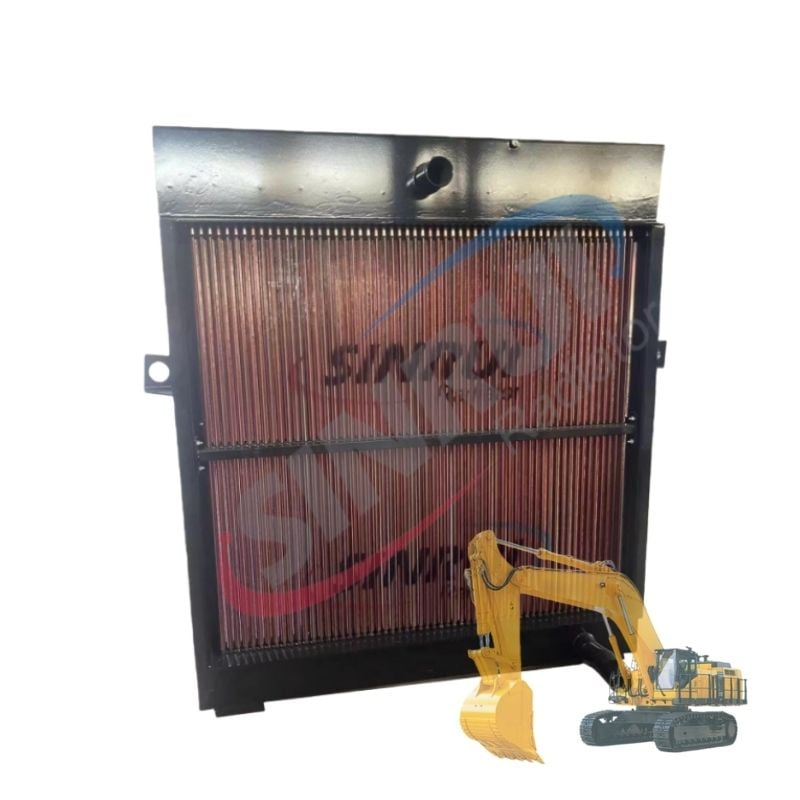
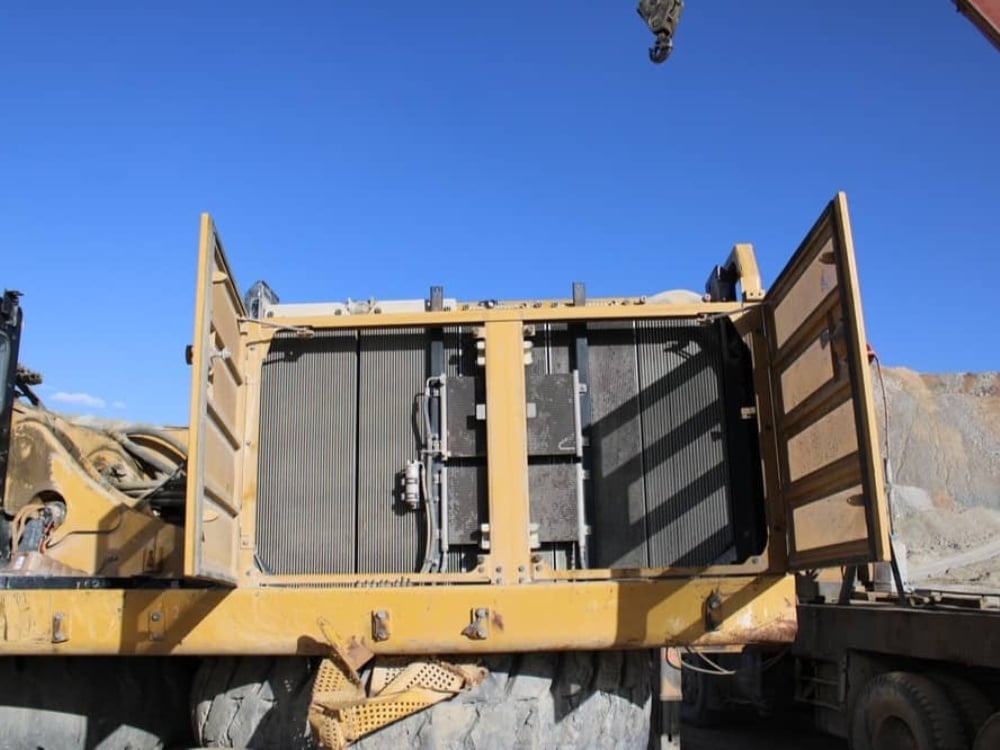
Close-up of dry cooler fin coil surface and mounting frame
How quickly does fouling actually reduce dry cooler efficiency?
It depends heavily on the environment, but the 30% capacity drop over three years cited above is typical for units operating in dusty or coastal conditions without a regular cleaning schedule. Sites with heavy particulate or salt exposure can see meaningful efficiency loss within months if fouling goes unchecked.
Does epoxy-resin coating really extend cleaning intervals, or is it marketing?
The physical mechanism is real: a smoother, denser fin surface gives dust, scale, and salt less to bond to, which slows fouling buildup compared to untreated or standard hydrophilic coatings. It doesn't eliminate the need for cleaning — it extends the interval between cleanings and reduces how aggressively contaminants adhere.
Can I tell fouling apart from a fan or motor problem without opening the unit?
Not always from a single symptom — a rising inlet-to-outlet temperature difference can indicate either fouling or a mechanical fan issue. Running through the full 4-step checklist above (visual, temperature, airflow, motor current) together usually narrows it down: fouling typically shows reduced airflow with normal motor current, while a mechanical fault often shows abnormal current alongside the airflow drop.
Don't Let It Steal Your Profits
Fouling is the No. 1 killer of dry cooler efficiency, but it is entirely preventable. Rather than fighting fires after your unit derates or trips, choose the right protection at the specification stage — and build a monthly check into your maintenance routine.
Whether you need a new dry cooler, an upgrade of your existing unit, or simply expert advice on keeping your cooling system efficient, SINRUI is here to help.
Tell us your operating conditions — ambient temperature, water quality, unit model — and our engineering team will reply with a tailored cooling solution within 24 hours.
📧 Email: [email protected]
📞 Phone / WhatsApp: +86 536 8590148
🌐 Web: www.miningradiator.com
 Hot News
2026-10-12
2026-09-28
2026-09-27
2026-09-23
2026-09-17
2026-08-25
 EN
EN