
No. 4616, shengli East Street, Kuiwen District, Weifang, Shandong. 865368590148 [email protected]
How a Core Works, What It Does, and How It Is Organized
1. The primary goal for designing a core is to create the maximum amount of heat transfer from a liquid to air. The design accomplishes this by incorporating two mechanical phenomena:
There are two ways in which heat leaves the coolant lock to become transferred to ambient air:
Conduction: Heat is transferred from the hot coolant into the core (metal tube) by conduction. Convection: Air moving over the heated surfaces will physically take away (convey) the heat.
2. The parts of a core and how they all serve the same objective:
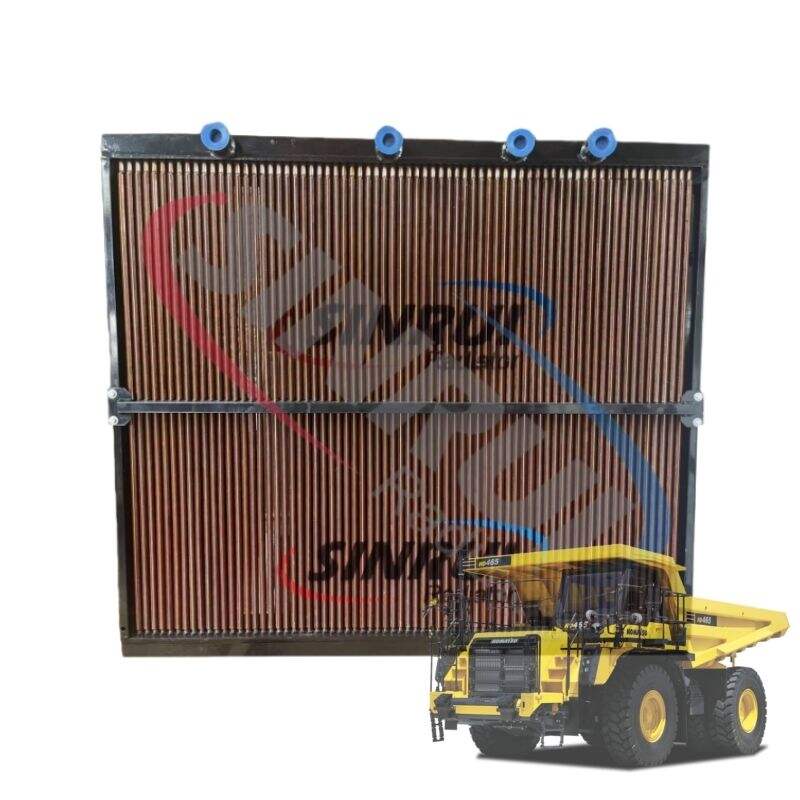
A core consists of a series of stacked layers of alternating tubes and fins.
Tubes (coolant channels)
Purpose of tubes: The tubes carry hot coolant from the radiator inlet to the radiator outlet.
Design for purpose: To limit the amount of thermal resistance (that is, how much of the heat is not transferred into the water). Tubes are made from thin metallic materials (aluminum typically), and the flatten shape (elongated) creates more surface contact area between the wall of the tube and the water.
Fins (air channels/heat sinks)
Purpose of fins: The fins are the major thermal-surface area exposed to the air.
Design for purpose: Fins are thin, corrugated metal sheets (usually aluminum) attached to the tubes.
Key Innovation: A bond (soldered, brazed) exists between the fins and the tubes, forming a continuous thermal path: coolant → tube wall → fin → air.
The ripples in the corrugated pattern promote turbulence in the air, removing the boundary layer and increasing the transfer of heat away from the fins while adding structural stability to the fins.