
No. 4616, shengli East Street, Kuiwen District, Weifang, Shandong. 865368590148 [email protected]
Primary function of radiator is to eliminate waste heat.
Internal combustion engine (I.C.E.) is inefficient; only 30–40% of fuel energy converts to mechanical work; remaining energy is wasted (produces waste heat).
If waste heat is not removed, engine components (i.e., pistons, cylinders, valves, cylinder heads) will overheat and cause catastrophic failures in I.C.E. engines.
Radiator's primary heat exchanger is used in conjunction with the engine's liquid cooling system to remove waste heat produced by the engine from engine coolant and transfer it into ambient air outside the vehicle.
How this purpose is accomplished: The radiator's design allows the radiator to work as the central part of a repeated and continuous mechanical process to remove waste heat.
Hot Coolant In: Superheated coolant (i.e., mixture of water and antifreeze) that has been heated by the engine is pressurized and pumped into the inlet tank of the radiator by the water pump.
Heat Transfer: As superheated coolant passes through a series of thin tubes (cores) within the radiator, the superheated coolant heats the sides of the tubes. The tubes are also designed to have a series of fins, which increase the amount of surface area exposed to the air, on sides of the tubes.
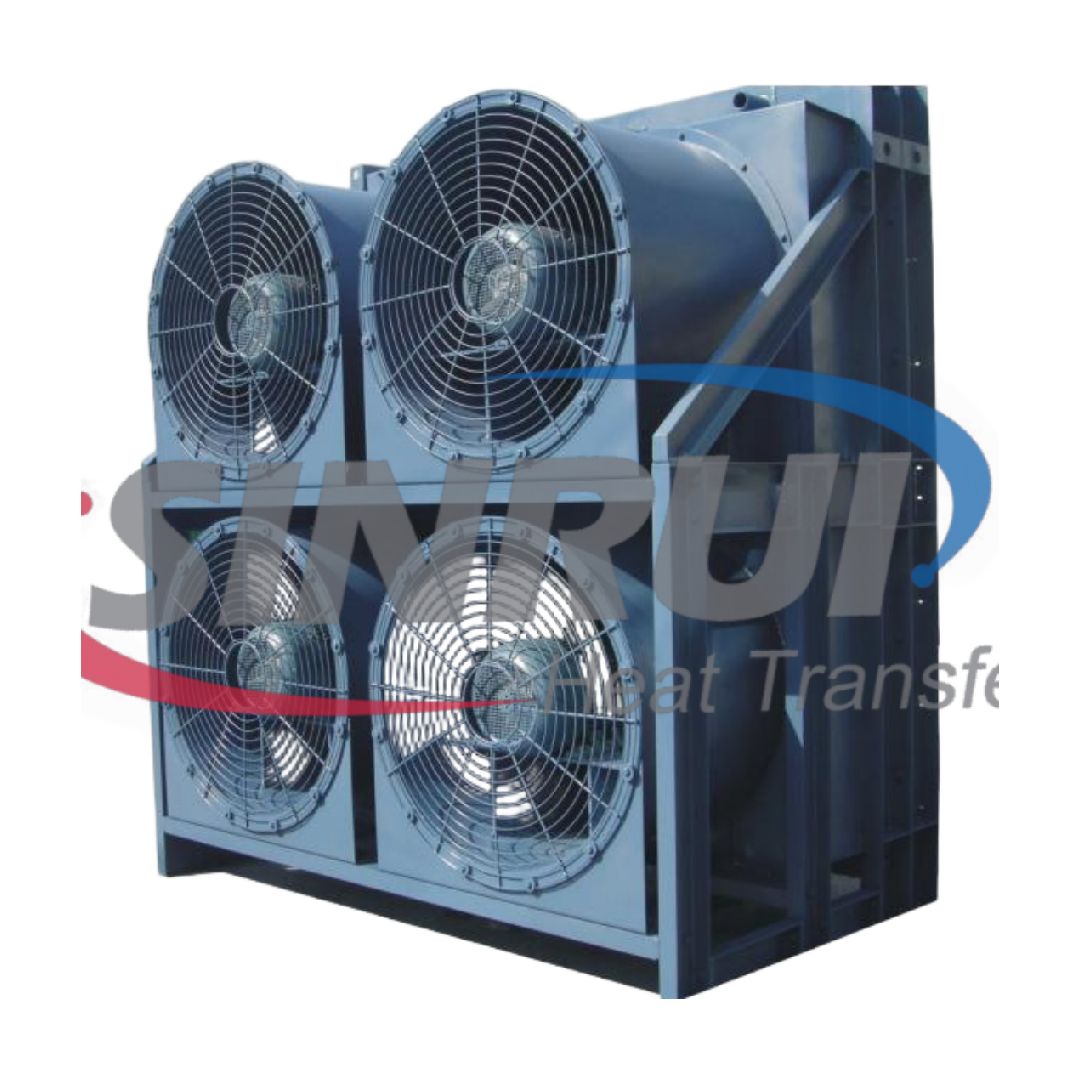
Airflow: While driving, the forward motion of the vehicle forces ram air to be pushed through the fins of the radiator by the vehicle's forward motion. When stationary or going slow, a fan is used to either pull or push air through the radiator's fins.
Heat Dissipation: Heat from the superheated coolant is conducted through the tube walls into the fins and dissipates into the air that is being transported through the radiator by the ram or fan air.
Cooled Coolant Out: The cooled coolant will be in the outlet tank of the radiator at a minimum temperature of 10-20 °C lower than the coolant that has been in the inlet tank. After leaving the outlet tank of the radiator, this cooled coolant will be returned to the block of the internal combustion engine (I.C.E.) to absorb additional heat from the I.C.E. and repeat this process.