Mining trucks and loaders operating in high-temperature mines often burn through radiators at an alarming rate – sometimes every 6 to 12 months. Repeated overheating, core cracking, and sudden coolant loss cost mine operators millions in downtime and replacement parts. But why do standard heavy-duty radiators fail so quickly in hot mining environments? And what should you look for when buying a heat-resistant radiator for extreme conditions? This guide answers both questions.
1. The Three Main Causes of Radiator Failure in High-Temperature Mines
1.1 Thermal Fatigue – The Silent Killer
In a high-temperature mine, ambient air can exceed 50°C (122°F). The cooling system cycles between extreme heat during peak load and relatively cooler idle periods. This constant expansion and contraction stress the radiator core. After hundreds of cycles, solder joints crack, tube-to-header bonds weaken, and pinhole leaks develop.
Typical data:
A standard aluminum radiator experiences measurable tube deformation after only 500 thermal cycles between 80°C and 105°C coolant temperature.
In contrast, a properly designed copper-brass radiator with deep-finned tubes can withstand over 2,000 cycles.
1.2 Cooling System Overload and Insufficient Heat Rejection
Many mine operators assume a larger engine automatically means enough cooling capacity. Wrong. In high-temperature mines, the effective heat rejection of a radiator drops because the air-to-coolant temperature difference is smaller. For example, a radiator rated for 45°C ambient will lose about 15-20% of its heat rejection capability at 55°C ambient. If you don’t upsize the core or choose a heat-resistant radiator with higher fin density and optimized tube spacing, the engine will run hot continuously, accelerating coolant breakdown and internal corrosion.
1.3 Vibration and Frame Flexing
Mine haul roads are rarely smooth. Constant vibration loosens tube-to-fin bonds, while frame flexing causes misalignment between the radiator and fan shroud. In high-temperature mines, the metals are already softened by heat, making them more susceptible to fatigue cracks under vibration.
2. Special Challenges of High-Temperature Mines
In addition to the three causes above, high-temperature mines add two unique killers:
Dust + Heat: Fine dust clogs fin gaps. When combined with high heat, dust bakes into a hard crust that no amount of compressed air can fully remove. This permanently insulates the core.
Low-quality coolant top-ups: Remote mines often use untreated bore water, which has high mineral content. At elevated temperatures, minerals precipitate on internal surfaces, reducing heat transfer by up to 30%.
Figure 1: Radiator fins clogged with dust from a mine site.
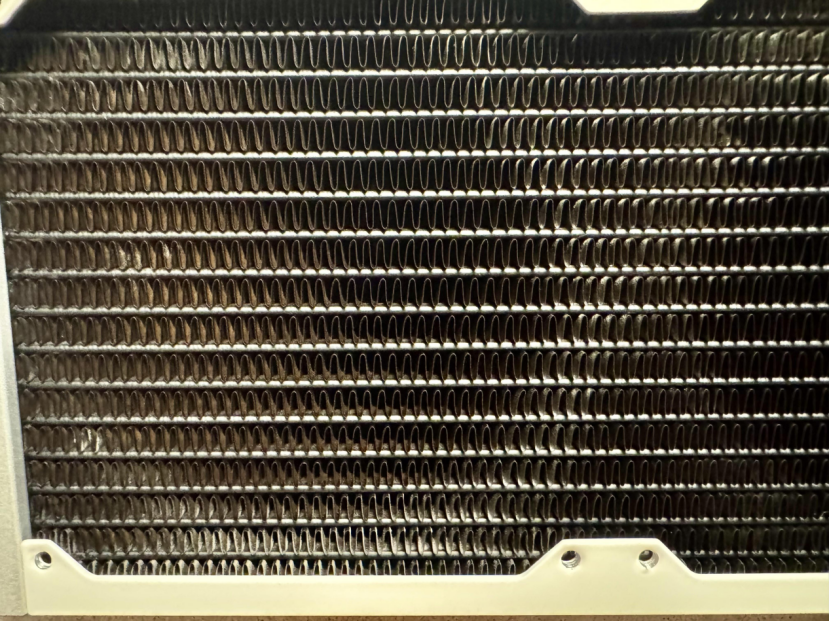
Alt text: Mining radiator fins blocked by dust from mining truck.
3. How to Choose a Truly Heat-Resistant Radiator – A Buyer’s Checklist
When sourcing a heat-resistant radiator for high-temperature mines, do not rely on generic “heavy-duty” claims. Instead, verify these five specifications:
3.1 Core Material
Copper-brass outperforms aluminum in heat conductivity (≈400 W/m·K vs 235 W/m·K) and thermal fatigue resistance. For extreme heat, choose a lead-free solder with higher melting point (260°C).
Aluminum can work if it uses a brazed (not soldered) core and thicker tube walls (min 0.6mm).
3.2 Fin Density and Pattern
Standard: 12-14 fins per inch (FPI). For high-temperature mines: 8-10 FPI to reduce clogging and improve airflow in dusty heat.
Offset fin pattern increases turbulence and heat transfer by 15-20%.
3.3 Tube Design
Deep-drawn tubes with integral fins (no separate solder) are more resistant to thermal fatigue.
Tube wall thickness: at least 0.5mm for aluminum, 0.45mm for copper.
3.4 Header Tank Construction
Bolted or swaged header tanks allow for cleaning and repair. Welded tanks are stronger but harder to service.
Expansion gaps or flexible mounting grommets reduce stress from thermal expansion.
3.5 Cooling Margin
Demand at least 20% cooling margin above the engine’s maximum heat rejection at highest ambient temperature. Example: If the engine rejects 200 kW of heat at 55°C ambient, the radiator should be capable of 240 kW.
4. Real-World Example: A Gold Mine in West Africa
A gold mine in Mali (average ambient 48°C, peak 52°C) was replacing aluminum radiators on their 100-ton haul trucks every 9 months. After switching to a heat-resistant radiator with a copper-brass core, 8 FPI offset fins, and a bolted steel header tank, the same radiators have been running for 28 months with only minor cleaning. The mine saved $18,000 per truck per year in radiator replacement costs.
5. Conclusion – Invest in True Heat Resistance
Most heavy-duty radiators fail in high-temperature mines not because they are “cheap,” but because they are designed for moderate climates (35°C ambient, low dust, minimal vibration). When you operate in real heat – 50°C+, dust-loaded air, and rough roads – you need a dedicated heat-resistant radiator. Use the checklist above to challenge your supplier. Better yet, ask for thermal cycle test reports and field case studies. A radiator that lasts 3 years instead of 1 year pays for itself many times over.
Key takeaway: Don’t just buy a radiator. Buy a thermal solution engineered for your mine’s actual operating temperature.
 Hot News
2026-09-17
2026-08-25
2026-08-20
2026-08-14
2026-08-12
2026-07-31
 EN
EN