 EN
EN
Why Mining Engines Demand Specialized Mining Radiator Systems
Extreme Thermal Loads: Continuous High-Load Operation in Harsh Environments
Mining engines typically operate around 90 to 95 percent of their maximum capacity for well over 20 hours each day, which creates about 40% more heat compared to regular industrial engines according to thermal imaging research. This extreme thermal demand is precisely why a standard mining radiator often fails. The temperature outside often goes above 50 degrees Celsius in open pit mines, and things get even worse underground where ventilation is terrible and dust builds up really fast—conditions that directly challenge any mining radiator. Given all this, traditional radiator systems don't last long before breaking down because they face three main problems working together against them, problems that a purpose-built mining radiator must overcome. First, there's the constant stress on engines when moving massive loads weighing over 400 tons. Second, air flow gets blocked as dust accumulates at rates reaching 10 grams per cubic meter, which clogs a conventional mining radiator. Third, the standard aluminum fins used in these radiators start to break down when core temperatures go past 120 degrees Celsius. These combined factors make it nearly impossible for conventional cooling solutions to function properly in mining environments.
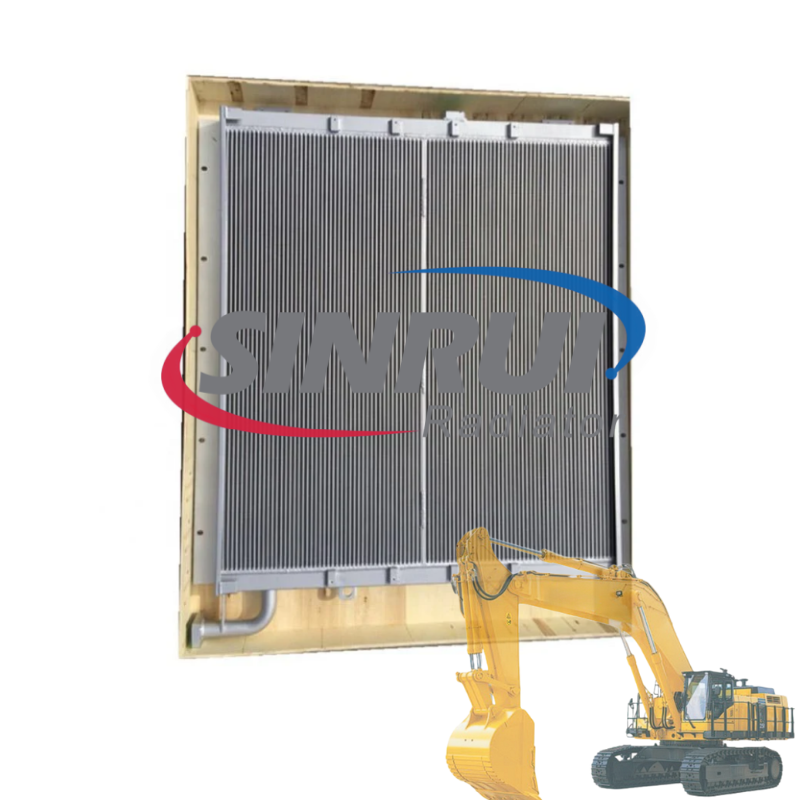
A specialized mining radiator addresses this through reinforced tube-to-header joints and staggered louvered fins engineered to preserve airflow integrity—even with heavy dust coatings. This robust design is what defines an effective mining radiator built for such severe duty.
The Consequence of Failure: Engine Derating, Downtime, and Costly Repairs
When engines overheat, they automatically reduce power output somewhere between 15% to 20%, which slows down haul trucks by around 8 kilometers per hour. This kind of performance drop really eats into productivity numbers. After each time this happens, operations typically grind to a halt for about 3 to 5 hours until everything cools back down properly. If left unchecked, ongoing heat problems can cause major breakdowns. We've seen cylinder heads warp costing roughly $28,000 just for replacement parts alone. Turbochargers need replacing at about $14,000 apiece when damaged from excessive heat. And getting repairs done takes forever in remote mining sites where service teams might be days away. These kinds of issues pile up fast during hot weather operations.
Total cost per thermal failure exceeds $185k—including parts, labor, and production losses—making cooling system reliability a top operational priority. As confirmed by the 2024 Global Mining Operational Report, 68% of mine operators now prioritize radiator upgrades as a strategic uptime investment.
How Mining Radiators Achieve Reliable Heat Dissipation Under Dust and Heat Stress
Core Design Innovations: Fin Density, Tube Geometry, and Corrosion-Resistant Materials
The mining radiator design incorporates several key improvements that set it apart from standard models. For starters, we've bumped up the fin density around 20 percent over what's typical in industrial radiators. This isn't just about adding more surface area though. The spacing between fins has been carefully adjusted so they don't get clogged with dust after a while. Another big change comes in the shape of the tubes themselves. Instead of traditional round tubes, we use flat ones which let the coolant touch more metal surface. This actually makes heat transfer work better, maybe around 30 something percent faster than regular designs. And then there's the material choice. We go with special aluminum alloys that can handle all sorts of harsh conditions. These materials stand up to acidic mine dust and those road salt chemicals workers sometimes use. All these upgrades mean the radiator keeps working properly even when temps outside hit well over 50 degrees Celsius day after day.
Dust Mitigation Strategies: Pre-Filters, Reverse-Blow Systems, and Adaptive Fan Logic
Good dust management needs multiple layers of smart protection working together. The pre-filters catch those big particles first, stopping them from getting into the main system where they cause problems. These filters alone can cut down on internal buildup by somewhere between 60 and 80 percent. For tougher situations, reverse blow systems kick in when things are quiet. They send bursts of compressed air through the system to shake loose all that stubborn dust, even in places where particulate levels go above 500 mg per cubic meter. The smart fan controllers are another key piece. They constantly monitor temperature changes and pressure readings, adjusting their speed accordingly. This means fans don't run needlessly, which keeps out extra debris while still keeping temperatures stable. We tested these systems in actual copper mines and saw pretty impressive results. Dust related breakdowns dropped by around 70%, and technicians had to service radiators almost half as often as before.
Real-World Performance: Validating Mining Radiator Effectiveness in Field Operations
Case Study: Sustained Cooling at 55°C Ambient + High Dust Load
Out in the Australian Pilbara where it gets scorching hot at 55 degrees Celsius and there's plenty of silica dust floating around over 500 micrograms per cubic meter, one of those big OEM heavy haul trucks kept its engine cool thanks to a specially designed radiator. This radiator had these staggered louvered fins spaced at 16 per inch along with copper brass tubes inside. What makes this setup work so well is that it stands up against all that abrasive silica dust without sacrificing airflow through the system. There's also this clever reverse pulse cleaning feature built right in that kicks on when the truck isn't moving. No need for anyone to climb under the hood and clean things manually anymore. This means the truck keeps running smoothly even through long shifts without any downtime for maintenance.
Operational Data Insight: 68% Rise in Radiator Maintenance Frequency Since 2020 (CIM, 2023)
Looking at field data across 41 different mining operations shows something worrying about cooling systems these days. Radiator problems have gone up quite dramatically actually - we're talking around 68% more maintenance issues related to radiators since 2020 according to research from the Canadian Institute of Mining, Metallurgy and Petroleum last year. The main culprits seem to be higher temperatures putting stress on equipment plus all that fine dust getting into the systems. Mines that switched to newer radiators with smart fan controls saw their service intervals stretch out by about 22%, which means fewer unexpected breakdowns too. And let's face it, when haul trucks overheat and stop working, companies lose big money fast. We're looking at roughly $7,400 every single hour lost according to Ponemon Institute numbers from 2023. So what does this mean for mining operations? Simple really - standard off-the-shelf cooling solutions just won't cut it anymore. Operators need specialized heat management systems designed specifically for mining conditions, not just automotive parts or generic industrial components that get modified later.
FAQ Section
1. Why are traditional radiator systems not effective in mining environments?
Traditional radiator systems struggle due to constant high load operation, dust accumulation blocking airflow, and aluminum fins breaking down at high temperatures, all common in mining environments.
2. What are the consequences of radiator failure in mining engines?
Radiator failures lead to engine derating, downtime, costly repairs, and significant operational losses.
3. How do specialized mining radiators improve performance?
Specialized mining radiators use reinforced joints, staggered louvered fins, and advanced dust mitigation techniques to ensure reliable cooling even in extreme conditions.
4. What innovations are incorporated in mining radiator design?
Innovations include increased fin density, flat tube geometry for better heat transfer, and corrosion-resistant materials.
5. How do smart fan controllers aid in dust management?
Smart fan controllers adjust speed based on temperature and pressure readings, reducing unnecessary debris while maintaining stable operating temperatures.