 EN
EN

The shift toward electrified and hybrid equipment in the mining industry has fundamentally changed what is expected from a mining radiator. Where traditional diesel-powered machines generated heat in relatively predictable patterns, electrified and hybrid drivetrains introduce new thermal loads that demand more sophisticated cooling solutions. A mining radiator must now manage heat from both conventional combustion components and high-voltage electrical systems simultaneously, making its design and performance more critical than ever before.
Understanding what a mining radiator must deliver in electrified and hybrid contexts is essential for fleet managers, maintenance engineers, and procurement teams. This article examines the thermal challenges unique to these modern machines, the structural qualities a mining radiator must possess, and the operational considerations that guide selection and servicing decisions. Getting the mining radiator specification right is not simply a maintenance concern — it is a core component of machine reliability and total cost of ownership.
Thermal Challenges in Electrified and Hybrid Mining Equipment
Dual Heat Source Complexity
Unlike a conventional diesel haul truck, a hybrid or electrified machine generates heat from multiple simultaneous sources. The internal combustion engine, if present, still produces significant thermal output that the mining radiator must dissipate. At the same time, power electronics, electric motors, and battery packs generate their own heat signatures that require dedicated or integrated cooling circuits. The mining radiator must serve as a central node in a thermal management architecture that handles these overlapping heat loads without allowing any system to exceed safe operating temperatures.
This dual-source complexity means that a mining radiator designed purely for diesel applications may be inadequate in a hybrid context. The heat rejection capacity must be scaled to match the combined thermal output of both systems. Engineers specifying a mining radiator for hybrid equipment must account for peak load scenarios, such as long uphill hauls under full electric assist, where thermal stress reaches its highest point. A mining radiator that cannot sustain performance under these conditions becomes a reliability liability.
Elevated Ambient Conditions in Open-Cut Operations
Open-cut mining operations expose equipment to extreme ambient temperatures, abrasive dust, and altitude variations that compound the thermal challenge. A mining radiator operating at elevation, where air density is lower, must compensate for reduced convective cooling efficiency. In high-ambient-temperature environments, the temperature differential between coolant and surrounding air narrows, forcing the mining radiator to work harder to achieve the same heat transfer result. These environmental realities make core design, fin density, and material selection especially important factors in mining radiator specification for electrified fleets.
Structural Requirements for Modern Mining Radiators
Core Design and Material Durability
A mining radiator for electrified or hybrid equipment must be built to withstand both mechanical vibration and chemical exposure. Mining haul trucks operate on rough terrain where vibration stress is constant, and a mining radiator with inadequate structural integrity will develop cracks or leaks that compromise the entire cooling system. High-quality brazed aluminum or copper-brass cores are commonly used in mining radiator construction because they offer a strong balance of thermal conductivity, weight efficiency, and mechanical resilience.
The tank and header plate design of a mining radiator must also be robust enough to handle pressure cycling as the machine moves between load and idle states. In electrified machines, the cooling system may experience more frequent pressure transitions due to the on-off nature of electric motor engagement. A mining radiator engineered for this duty cycle will include reinforced header plates and secure tube-to-header joints that resist fatigue over tens of thousands of operating hours.
Integration with Multi-Circuit Cooling Systems
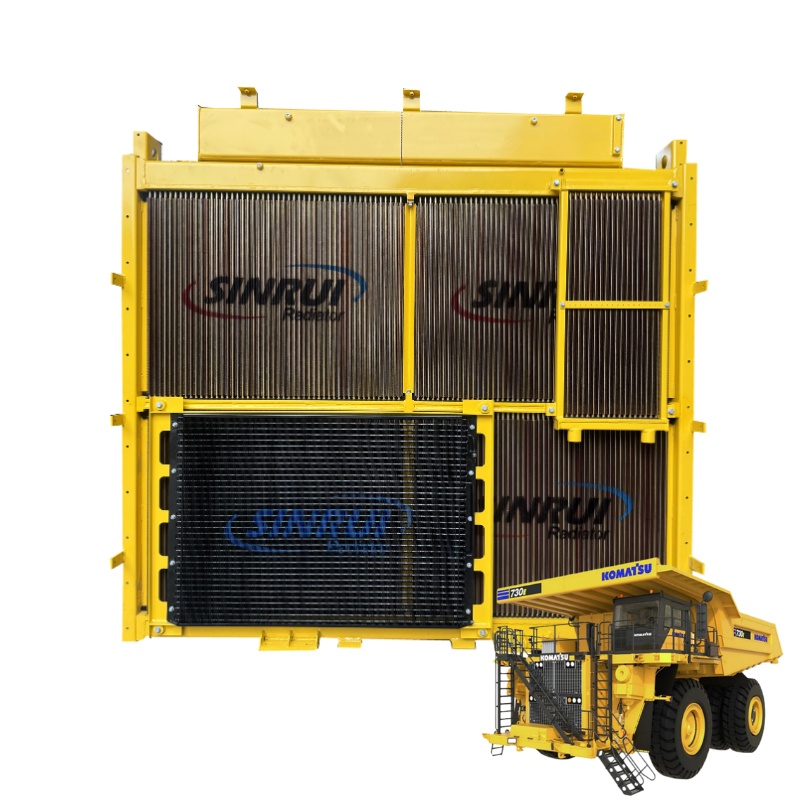
Modern hybrid mining equipment often uses multi-circuit cooling architectures, where separate coolant loops serve the engine, power electronics, and battery thermal management systems. The mining radiator may form part of a combined cooler package alongside charge air coolers, hydraulic oil coolers, and transmission coolers. In this configuration, the mining radiator must be designed to interface cleanly with adjacent cooler units without compromising airflow distribution across the full cooling stack.
Proper airflow management is critical in a stacked cooling configuration. If the mining radiator blocks or restricts airflow to secondary coolers, the entire thermal system becomes unbalanced. Engineers must verify that the mining radiator core thickness, fin pitch, and mounting position are compatible with the overall cooler pack layout. A mining radiator that fits mechanically but disrupts the airflow pattern can cause downstream overheating in other systems.
Operational and Maintenance Considerations
Inspection and Cleaning Intervals
A mining radiator in a dusty open-cut environment requires regular inspection and cleaning to maintain performance. Fine mineral dust accumulates between cooling fins and progressively reduces airflow, lowering the heat rejection capacity of the mining radiator over time. Maintenance teams should establish cleaning intervals based on actual site dust levels rather than relying solely on manufacturer recommendations developed for standard environments. High-pressure air or water cleaning procedures must be applied carefully to avoid fin damage on the mining radiator core.
For electrified and hybrid equipment, a degraded mining radiator can have cascading effects. If the engine cooling circuit loses efficiency, the machine's thermal protection systems may reduce power output to prevent overheating. In a hybrid drivetrain, this power reduction affects both the combustion and electric components, potentially interrupting a haul cycle at a critical moment. Keeping the mining radiator in optimal condition is therefore a direct productivity concern, not only a maintenance obligation.
Replacement Part Compatibility and Sourcing
When a mining radiator reaches the end of its service life or sustains damage, sourcing the correct replacement part is essential. The mining radiator specification must match the original equipment design in terms of core size, port configuration, flow capacity, and pressure rating. Using an undersized or mismatched mining radiator in an electrified or hybrid machine introduces thermal risk that can lead to premature component failure.
Procurement teams should verify that replacement mining radiator units are compatible with the specific machine model and its cooling circuit architecture. A mining radiator that was engineered for a diesel-only variant of a machine may not provide the same performance when installed in a hybrid variant with higher thermal loads. Consulting technical documentation and working with qualified suppliers helps ensure that the mining radiator chosen for a replacement application meets the full performance requirements of the machine.
FAQ
Why does a hybrid mining machine need a different mining radiator than a diesel-only machine?
A hybrid machine produces heat from both its combustion engine and its electrical components, requiring a mining radiator with greater heat rejection capacity and, often, integration into a multi-circuit cooling system. A standard diesel-spec mining radiator may not handle the combined thermal load reliably.
How often should a mining radiator be cleaned in a dusty open-cut mine?
Cleaning frequency depends on site-specific dust levels, but many operations inspect and clean the mining radiator every 250 to 500 operating hours. Sites with very high dust concentrations may require more frequent attention to maintain adequate airflow through the cooling core.
What happens if the wrong mining radiator is installed in an electrified haul truck?
An incorrectly specified mining radiator can lead to chronic overheating, reduced machine power output, accelerated wear on cooling system components, and potential damage to high-value electrical components such as inverters and motors. Always verify full compatibility before installing a replacement mining radiator.