Komatsu PC3000 Mining Excavator Radiator: Three Years In Field Operation Application: Open‑pit mining | Equipment: Komatsu PC3000 mining excavator | Radiator: SINRUI aluminum bar‑and‑plate assembly What can a three‑year site visit tell us about a min...
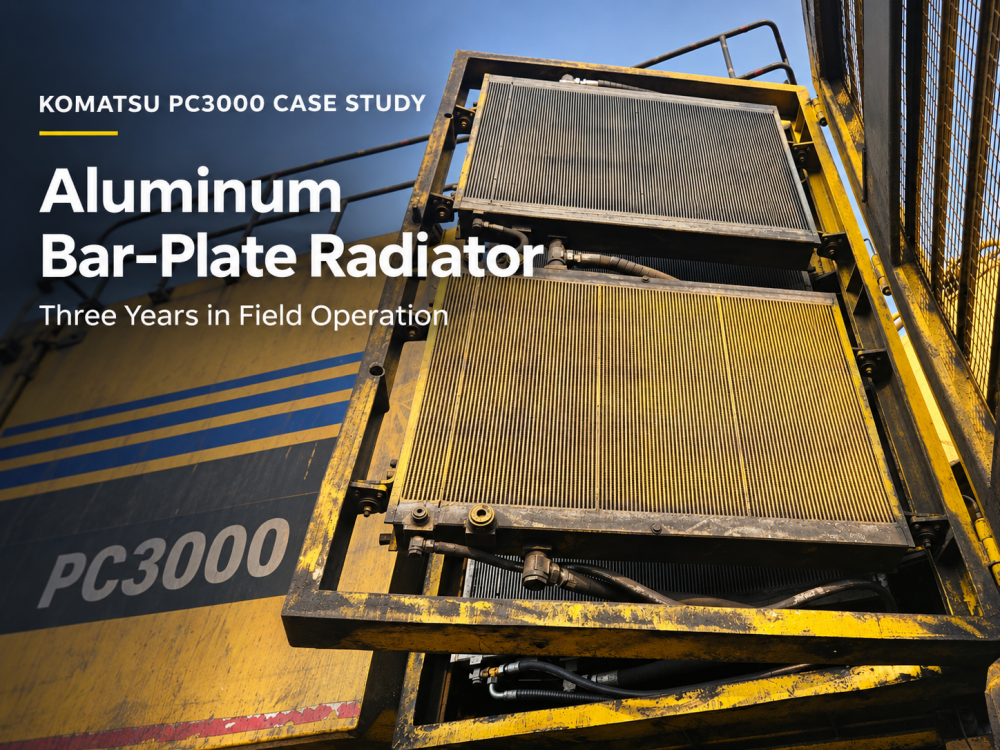
Application: Open‑pit mining | Equipment: Komatsu PC3000 mining excavator | Radiator: SINRUI aluminum bar‑and‑plate assembly
What can a three‑year site visit tell us about a mining excavator radiator? For this Komatsu PC3000, the answer begins with a close look at the cooling package still installed on the machine.
During a follow‑up visit to a mining site, SINRUI photographed an aluminum bar‑and‑plate radiator supplied for a Komatsu PC3000 excavator. The project material reports that the radiator had been operating for approximately three years. The photographs show the assembly and its mounting arrangement in service; they do not, by themselves, provide measured heat‑rejection or pressure‑test data.
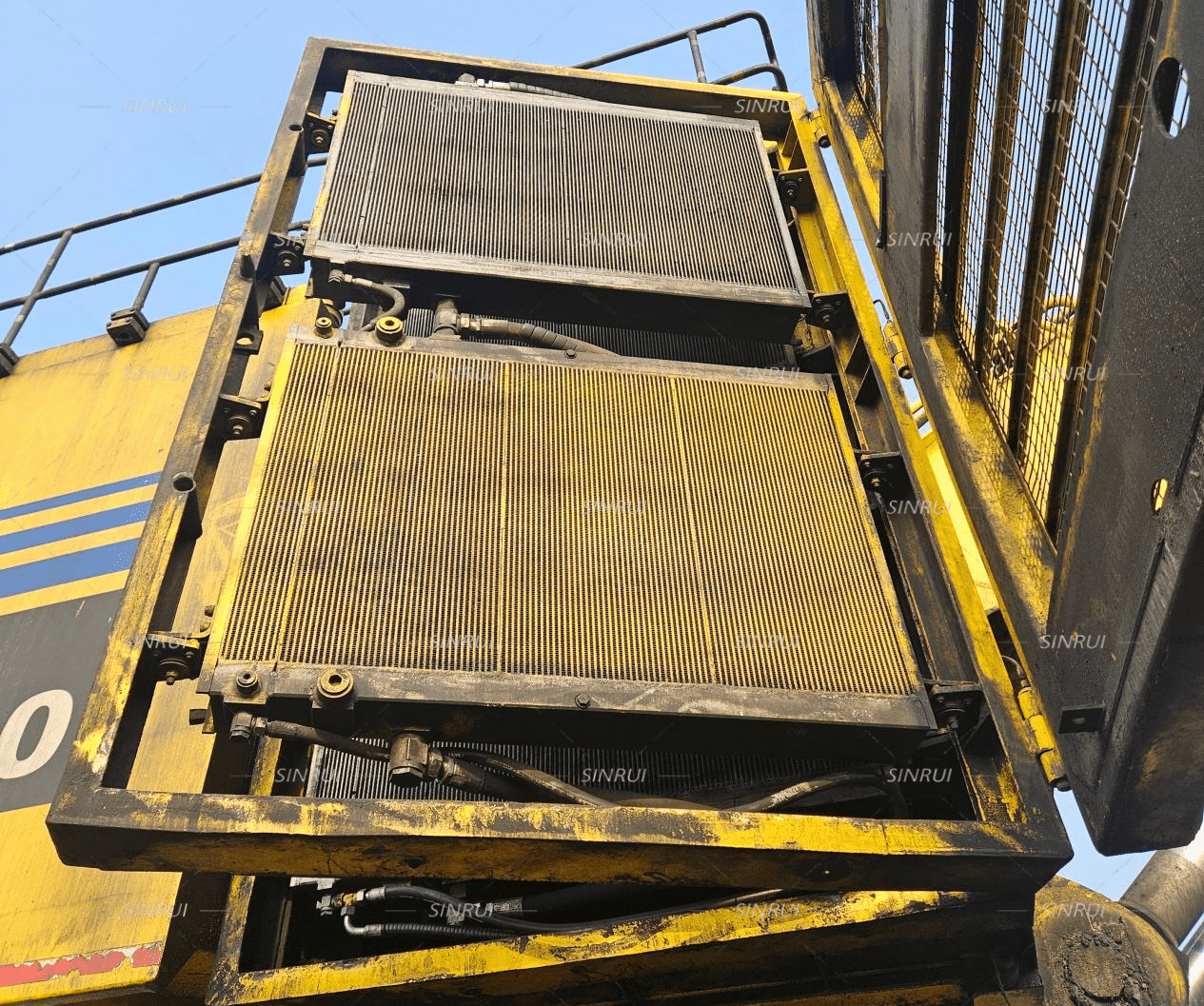
SINRUI aluminum bar‑and‑plate cooling assembly installed in the Komatsu PC3000.
Large hydraulic mining excavators operate for long periods under high engine and hydraulic‑system loads. Dust, debris, vibration and restricted maintenance access all affect how a radiator performs over time. A replacement cooling package must meet the machine’s thermal requirements while fitting within the existing installation envelope.
For the PC3000 application documented here, SINRUI supplied an aluminum bar‑and‑plate radiator assembly. The case is notable because the team was able to revisit the equipment after approximately three years of reported use and inspect the installed cooling modules.
The supplied design uses an aluminum bar‑and‑plate core rather than a removable‑tube copper construction. Plates, bars and fins form a compact, brazed heat‑exchanger matrix. This design can provide a strong core with useful heat‑transfer area within a constrained equipment space, provided the fin geometry, airflow and coolant circuit are properly matched to the operating duty.
For mining equipment, the choice of core geometry is a balance: heat rejection, pressure drop, debris accumulation, cleaning access, mounting loads, repairability and weight all matter. The aluminum bar‑and‑plate configuration was selected for this project; it should not be treated as universally preferable to copper fin‑tube alternatives.
The original project description highlights SINRUI’s controlled aluminum brazing process, including furnace temperature management and supporting production stages. Consistent joint quality is important because the assembled core must tolerate thermal cycling and operating pressure.
The source material lists an 8‑hour brazing stage, six hours of additional processing, and a “16‑hour” overall cycle. Since those figures do not reconcile without another two‑hour stage, this case does not publish a precise total cycle time until production records are confirmed. Likewise, brazing cannot be described as eliminating every possible leak or thermal‑stress failure.
The source document describes reinforcement at the radiator’s four corners and attention to load‑bearing contacts. On mining excavators, supporting the cooling package correctly helps manage vibration and installation loads. A reinforced mounting arrangement is intended to reduce concentrated stress, although actual fatigue life also depends on machine condition, frame alignment and service conditions.
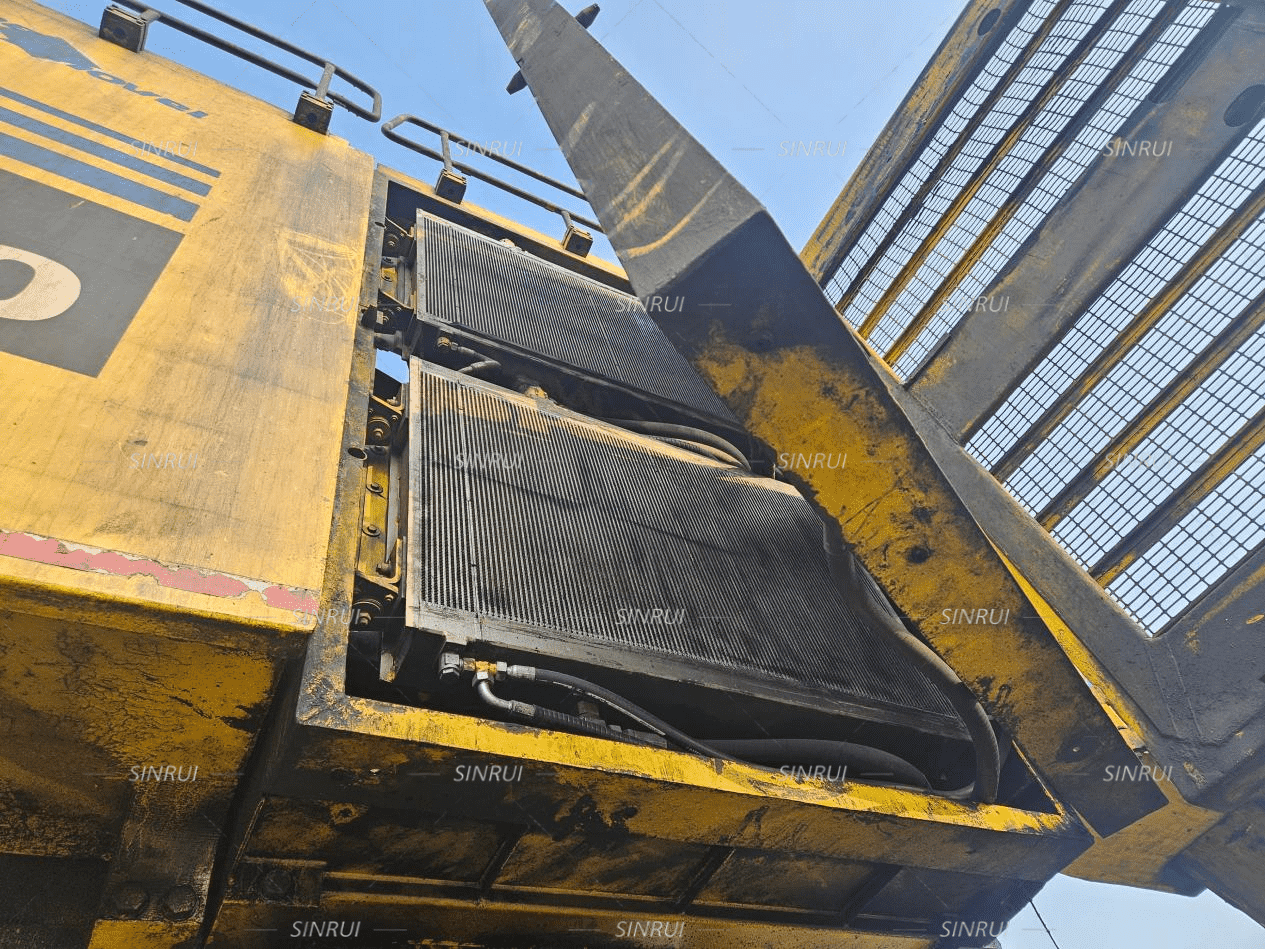
Installed PC3000 radiator modules and support arrangement during site inspection.
According to the supplied project notes, the radiator had been in service for around three years at the time of the site visit. Photographs document that the cooling package remained installed, with the radiator modules and mounting frame visible. This is valuable real‑world project evidence that complements factory‑level inspection.
However, the materials do not provide logged coolant temperatures, operating hours, pressure‑retention readings, leak inspection results or a comparison with the original unit. We therefore report three years of field use, not “undiminished cooling efficiency,” guaranteed leak‑free operation or a verified 3–5 year service‑life benchmark. Those conclusions would require supporting operating records.
When reviewing an excavator radiator that has been working for several seasons, three practical questions are worth asking: Are the fins and air passages accessible for cleaning? Are mounts and joints showing vibration‑related wear? And is the cooling performance still within the equipment manufacturer’s specified operating range under actual site conditions?
A periodic inspection combining photographs, measurements and operating data offers a more complete picture than radiator appearance alone. See our mining radiator maintenance guide for related inspection and cleaning considerations.
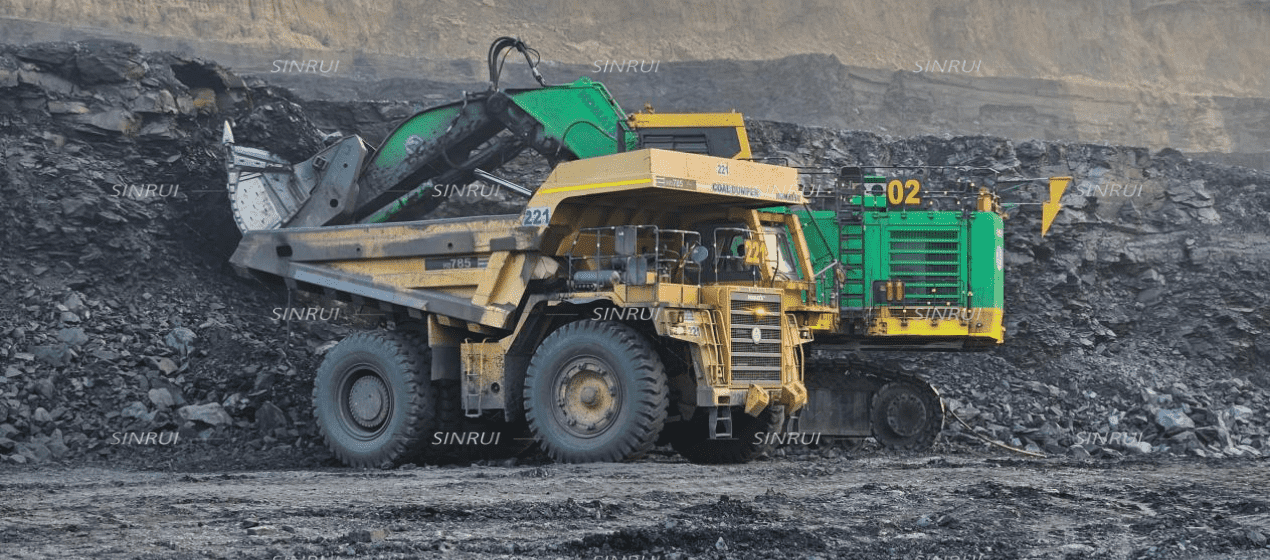
Komatsu mining machine operating at site.
Different Komatsu machines call for different cooling package designs. In addition to aluminum radiator assemblies, SINRUI supplies copper fin‑tube and serviceable core solutions for selected heavy‑duty mining applications. Core materials and construction should be chosen based on actual cooling duty and maintenance requirements.
Explore the Komatsu mining radiator range for related aftermarket cooling components. For a different type of application, read the copper core retrofit case—a separate project illustrating the benefits of removable copper fin‑tube construction in selected equipment.
The documented unit was a SINRUI aluminum bar‑and‑plate radiator assembly. It is different from the removable copper fin‑tube radiators used in other mining replacement projects.
No. The source reports about three years of field operation and provides site photographs. Performance verification would require operating temperatures, load conditions, service history and applicable test data.
A replacement can be assessed from machine information, existing radiator drawings or dimensions, cooling duty, connection locations and site conditions. Compatibility and final specification need engineering confirmation.
Aluminum bar‑and‑plate cores use a brazed construction and can offer compact cooling packages. Removable copper fin‑tube designs can allow localized tube servicing in suitable configurations. The better option depends on space, airflow, cooling duty, site maintenance and other design constraints.
Please share the Komatsu machine model and serial number, existing radiator reference, clear assembly photos, drawings or measured dimensions, inlet/outlet details and any known cooling problems. Operating ambient temperature and coolant information are also useful.
Whether you need an aluminum radiator assembly or a different core configuration, send your equipment model, existing radiator details and project requirements for a technical review. The goal is a cooling solution matched to the machine—not just a part with a similar appearance.
Explore the Komatsu radiator collection or contact the SINRUI team through the website.
 EN