For mine maintenance teams, replacing a bulldozer radiator is not only about restoring cooling performance. The replacement must also fit the existing machine, tolerate demanding operating conditions, and remain practical to maintain when damage occu...
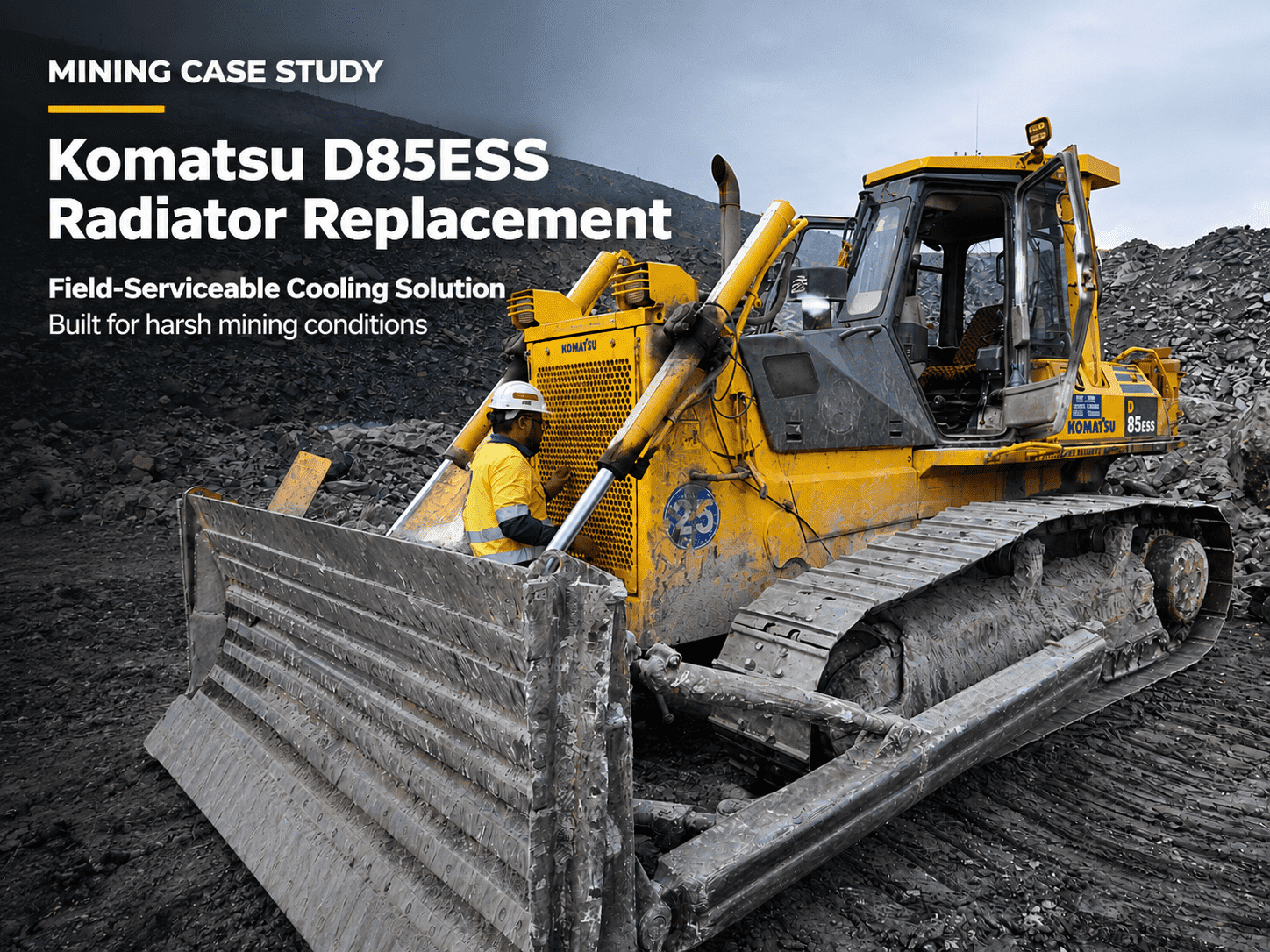
For mine maintenance teams, replacing a bulldozer radiator is not only about restoring cooling performance. The replacement must also fit the existing machine, tolerate demanding operating conditions, and remain practical to maintain when damage occurs.
This case describes the cooling challenges reported for a Komatsu D85ESS bulldozer and the removable‑tube radiator configuration proposed by SINRUI to improve field serviceability.
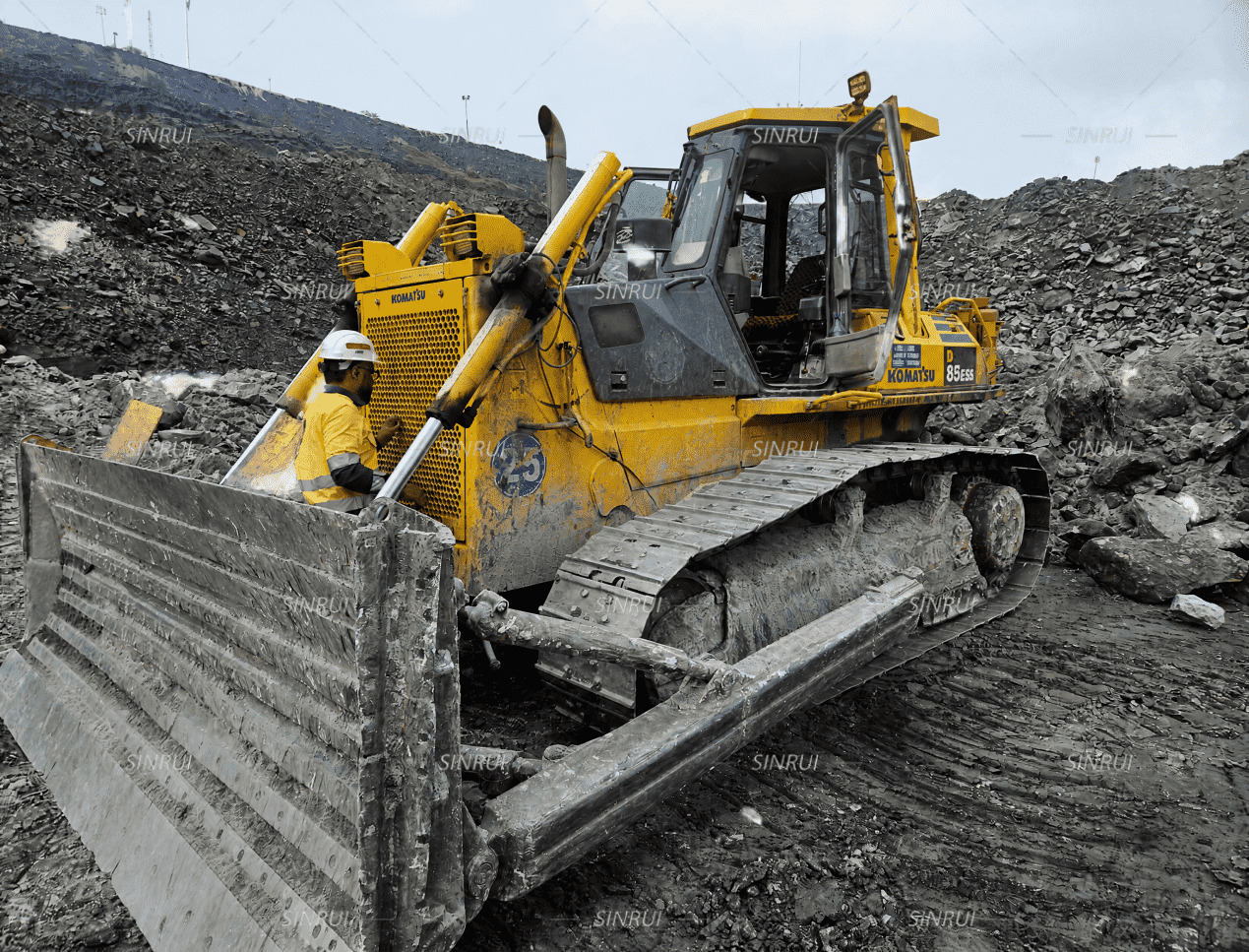
Komatsu D85ESS bulldozer operating at a mining site. Alt: Komatsu D85ESS crawler bulldozer in an open‑pit mining environment.
According to the project information, a mining contractor operating Komatsu D85ESS bulldozers faced recurring maintenance requirements involving radiator fouling, erosion and leakage. The existing cooling package was identified by the project reference TRAD 1150‑785‑0005. This reference and final machine compatibility should be verified against the original radiator before production.
A crawler dozer works close to loose rock and airborne dust. Its cooling package is also exposed to vibration and repeated thermal cycles. A heavy protective front grille can make access to the core more difficult, so a radiator that is hard to clean or repair can extend maintenance stops.
1. Dust and restricted access
Fine particles can collect between core passages and reduce the effective airflow area. When debris combines with moisture or oily deposits, routine cleaning can become more difficult—particularly where a protective grille limits access to the radiator face.
2. Airborne debris and fin damage
Dust and small particles carried by the cooling fan may gradually wear exposed cooling surfaces. Cleaning with excessive water pressure may also deform delicate fins. The degree of damage depends on the original core construction, airflow and site conditions.
3. Vibration and recurring leak repairs
Heavy equipment experiences chassis movement and vibration. Over time, thermal cycling and mechanical loading can contribute to stress at joints, mounting points and seals. A leak in a one‑piece core may require more extensive disassembly than a repairable modular design.
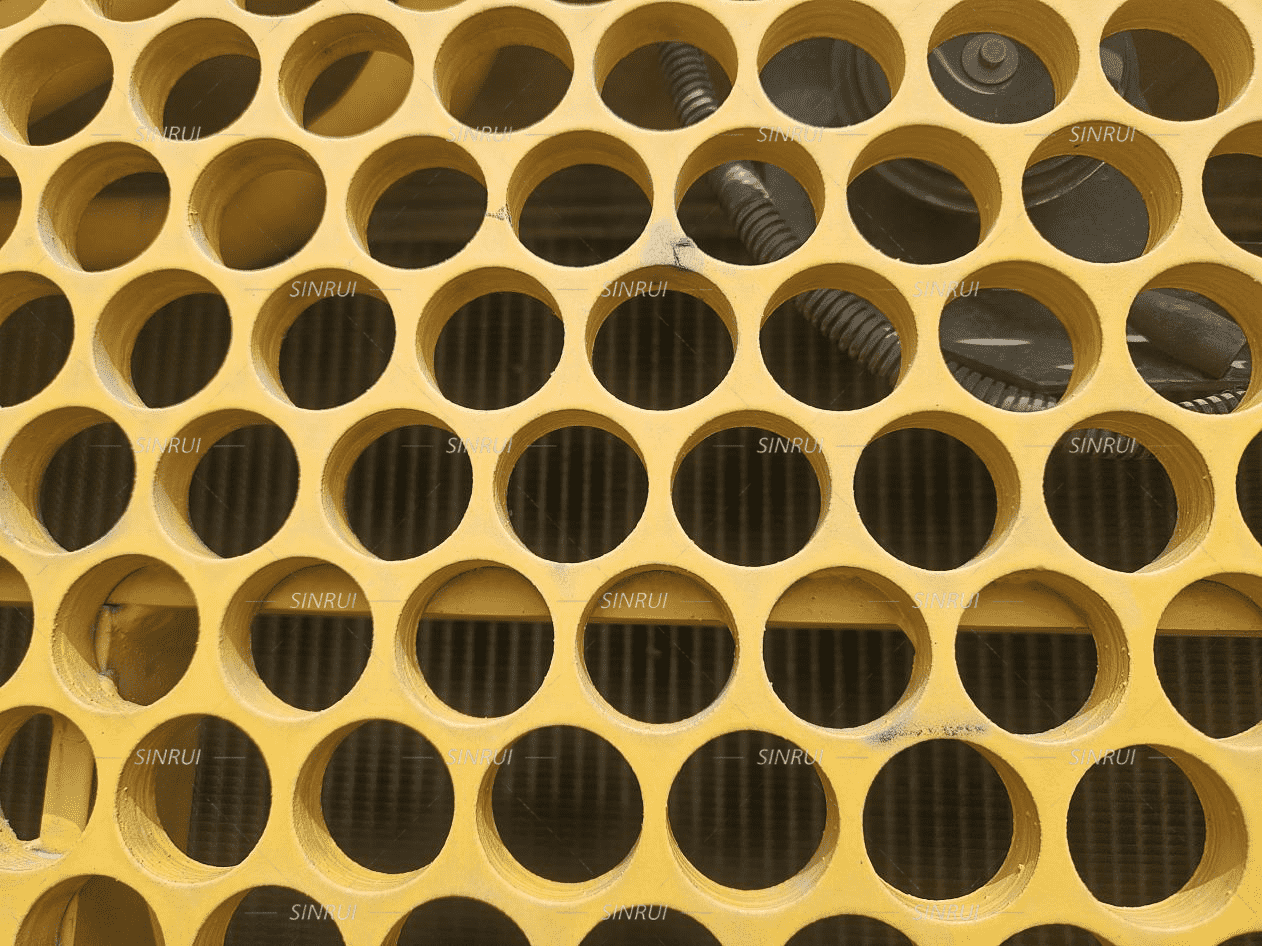
Protective grille and radiator passage area. Alt: Perforated protective grille in front of a Komatsu bulldozer cooling package.
The replacement specification focused on two practical requirements:
• Installation compatibility: match the original assembly envelope, connection positions, mounting interfaces and adjacent cooling components, subject to confirmation from the supplied drawings and dimensions.
• Field maintainability: provide access to individual cooling tubes and related seals so localized damage can be addressed without automatically replacing the complete core.
SINRUI developed a heavy‑duty removable‑tube radiator arrangement for the D85ESS application instead of reproducing a conventional fixed‑core structure. The approach retains the intended equipment interfaces while introducing independently serviceable tubes and sealing components. Final dimensions, materials, pressure requirements and thermal duty must be checked against the actual application.
Individual tubes for localized servicing
Where installation clearance and assembly layout permit, maintenance personnel can access and replace an affected tube rather than discard the entire core. The actual procedure and time required depend on the guarding arrangement, tube location and site access.
Sealed connections that accommodate movement
Individual tube connections use replaceable sealing components. This design can accommodate some relative movement and facilitate targeted seal replacement; it does not eliminate the need for routine vibration, mounting and leak inspections.
Maintenance planning for dusty mine sites
The practical benefit of this construction is serviceability: individual components can be inspected and replaced, allowing maintenance teams to plan repairs around equipment availability. Appropriate cleaning methods, coolant quality and spare seals remain essential to cooling performance.
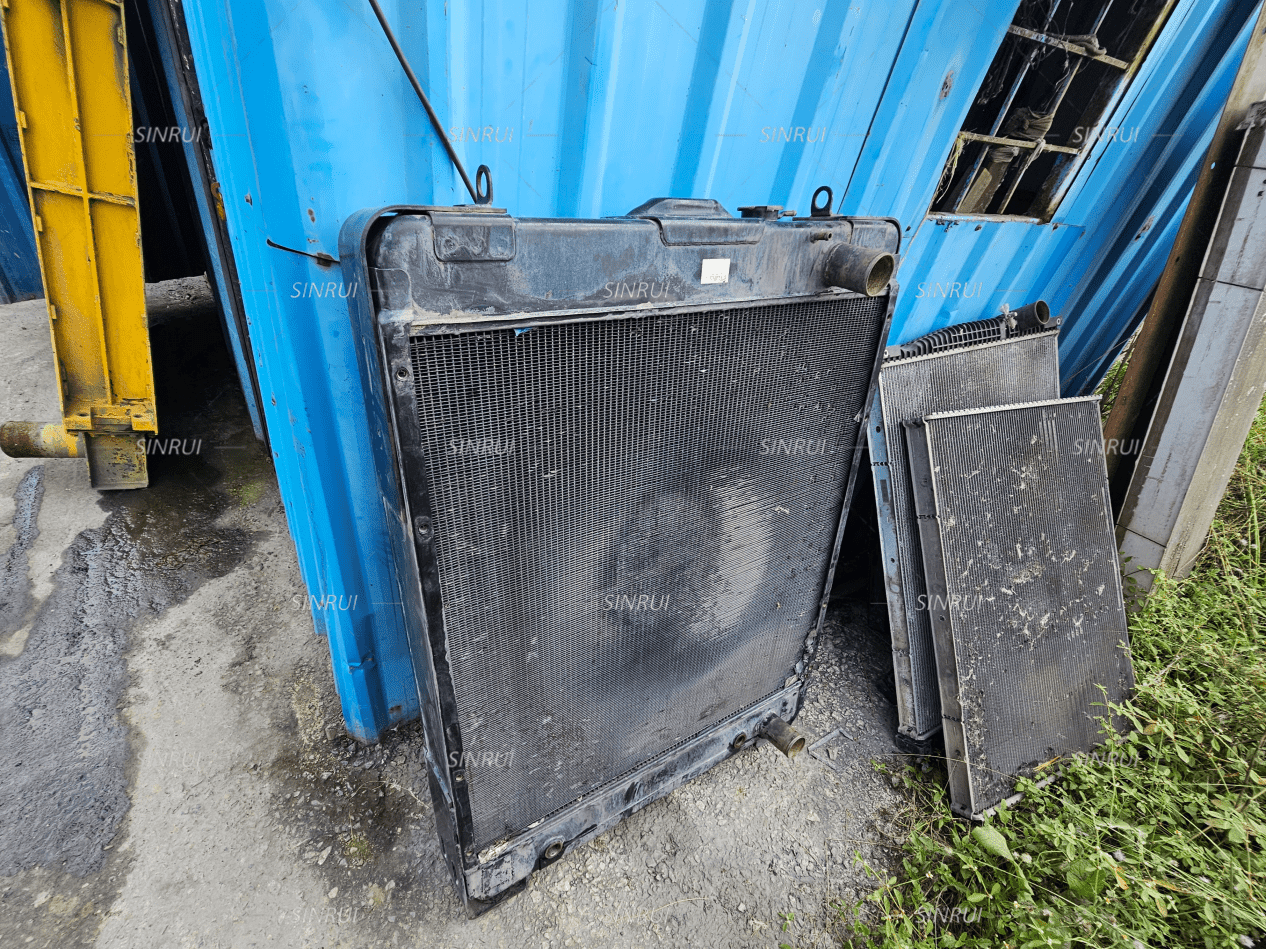
Original radiator photographed for the replacement assessment. Alt: Removed worn Komatsu D85 radiator assembly showing signs of use.
Compared with a radiator that requires extensive core disassembly for localized damage, the removable‑tube concept is intended to simplify component‑level repair and reduce dependence on complete core replacement. It may also improve the availability of maintenance options at remote mine sites.
The supplied project document does not include commissioning readings, confirmed service hours, measured repair‑time savings or post‑installation performance records. For that reason, these are design and maintenance advantages—not independently measured results from this installation.
Before selecting a replacement, confirm the equipment model and serial number, the existing radiator part/reference number, overall dimensions, connection locations, fan and shroud arrangement, hydraulic oil cooler interfaces, cooling duty, operating ambient temperature and site dust conditions.
A drawing or clear photographs of the removed unit are useful for the engineering review. For related equipment options, explore SINRUI’s Komatsu radiator range and its copper‑core retrofit case.
For ongoing maintenance practices, see How to Extend the Service Life of Mining Radiators. Seals, clips and relevant service items are listed under Mining Radiator Parts.
Is this radiator a direct replacement for every Komatsu D85ESS?
Not automatically. Compatibility needs to be checked against the machine serial number, existing radiator reference, drawings and mounting interfaces. The TRAD 1150‑785‑0005 reference in this case should be confirmed before ordering.
Can a single damaged tube be replaced on site?
A removable‑tube design is intended to support individual tube servicing. Whether the radiator can remain installed during replacement depends on access, guards and the specific configuration. Follow the approved maintenance procedure.
What information is needed for a customized Komatsu radiator quotation?
Please provide the machine model and serial number, OEM or existing radiator reference, photos or drawings, overall dimensions, connection details and any known cooling or operating issues.
Is a removable‑tube radiator always better than a conventional core?
Not in every application. The best option depends on cooling duty, footprint, dust exposure, vibration, service access, repair capability and budget. SINRUI can review the trade‑offs for the specific machine.
How long does a customized replacement usually take?
For many custom mining radiator orders, production and dispatch planning is typically around 3‑4 weeks after the drawing and specifications are confirmed. Timing depends on the design, materials and order conditions; request a confirmed lead time for your project.
SINRUI will participate in bauma CHINA 2026 at the Shanghai New International Expo Centre (SNIEC), November 24‑27, 2026. Visitors working with Komatsu, Caterpillar and other mining fleets are welcome to bring radiator references, drawings or project questions for a technical discussion.
SINRUI Booth: Hall N1.561 | Shanghai, China | November 24‑27, 2026
Send SINRUI your equipment details, existing radiator reference and available photos or drawings. Our team can review fitment, cooling requirements and serviceability before preparing a suitable replacement proposal.
Contact SINRUI Mining Radiator
 EN