 EN
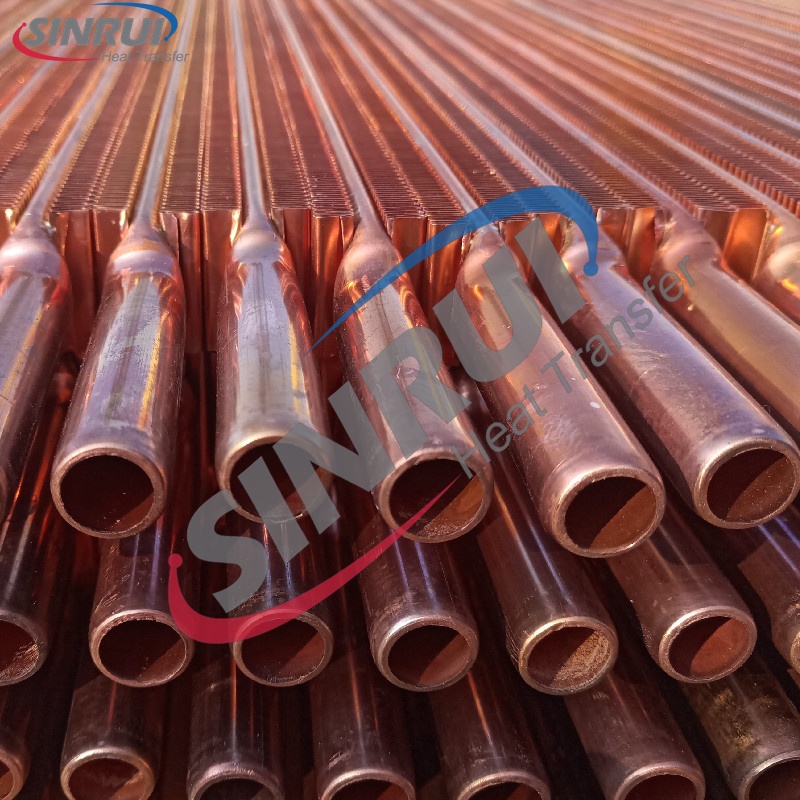
In industrial applications ranging from hydraulic systems to heat exchangers, the choice between seamless tube and welded alternatives fundamentally impacts performance, safety, and operational longevity. While both types serve critical functions, seamless tube delivers distinct advantages that make it the preferred choice for demanding applications where reliability cannot be compromised.
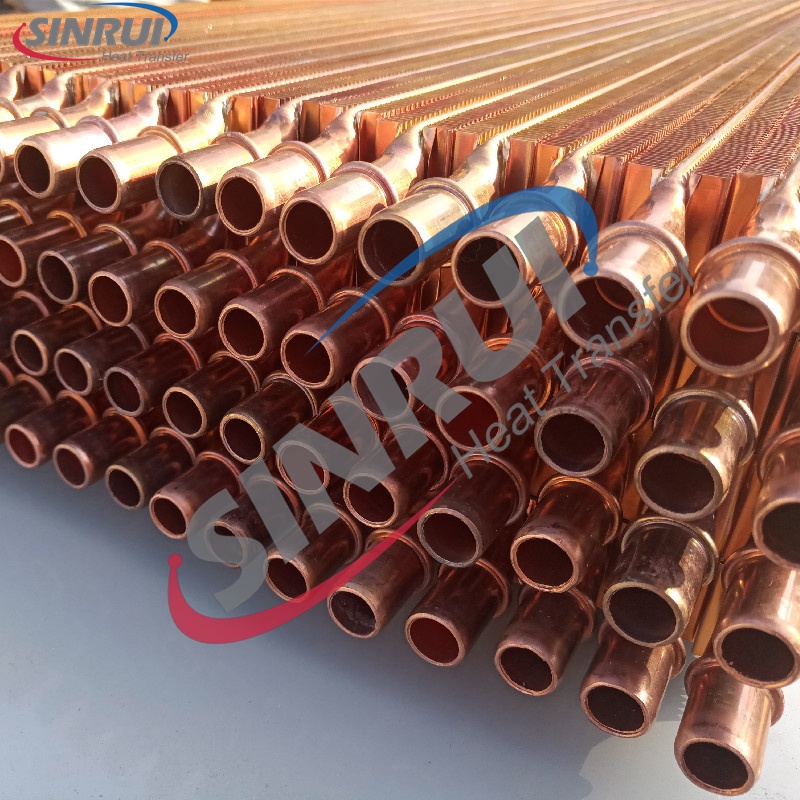
Understanding these advantages requires examining how seamless tube is manufactured and how its structural integrity differs from welded designs. The engineering differences are substantial and translate directly into measurable performance benefits across pressure capacity, fatigue resistance, and overall system reliability.
Superior Pressure Handling and Structural Integrity
Uniform Material Composition and Strength
Seamless tube is manufactured through a process where hot steel is pierced and rolled into a tubular shape without any seams or joints. This manufacturing method creates a material with completely uniform composition throughout its wall thickness and length. By contrast, welded tube consists of flat sheet stock that is formed and then welded along a longitudinal seam, introducing a distinct joint line within the tube structure. The seamless tube design eliminates this weakness point entirely, resulting in superior load distribution and consistent material properties along the entire length.
The uniform structure of seamless tube means pressure loads are distributed evenly across the cross-section. Welded tube experiences stress concentration at the weld seam, where the mechanical properties of the base material, heat-affected zone, and weld deposit can vary significantly. This stress concentration becomes increasingly problematic under cyclic loading conditions, making seamless tube the engineering choice for high-pressure hydraulic systems, boiler applications, and heat exchangers where operational reliability is non-negotiable.
Enhanced Pressure Rating Capabilities
For the same wall thickness and material grade, seamless tube consistently achieves higher pressure ratings than welded alternatives. This advantage stems from the absence of the weld seam, which is inherently weaker than the base material even when properly executed. Industrial standards and pressure vessel codes account for this reality by reducing the allowable stress on welded seams compared to seamless tube. In practical terms, this means seamless tube can either handle greater pressures at equivalent dimensions or allow for thinner walls at comparable pressure ratings.
This pressure advantage translates into significant design flexibility for engineers. Higher pressure capacity with seamless tube reduces the overall wall thickness required, lowering material costs and system weight. In aerospace, automotive, and offshore applications where weight optimization matters, seamless tube offers engineers a superior baseline from which to optimize design parameters. The pressure differential becomes even more pronounced in extreme temperature environments where material properties degrade and stress concentrations become more critical.
Fatigue Resistance and Long-Term Reliability
Superior Cyclic Loading Performance
Equipment operating under cyclic pressure fluctuations experiences fatigue stress that accumulates over thousands of pressure cycles. Seamless tube demonstrates dramatically superior fatigue resistance compared to welded designs because it lacks the stress concentration points that initiate crack propagation. When a component undergoes repeated pressure cycling, cracks preferentially initiate at geometric stress risers and material discontinuities. The weld seam in welded tube represents exactly this type of critical weakness point.
Test data consistently shows seamless tube can endure 2 to 3 times more pressure cycles before fatigue failure compared to welded tube of equivalent material and dimensions. For applications like hydraulic actuators in manufacturing equipment, mobile equipment systems, and industrial compressors where millions of cycles occur over normal operational life, this fatigue advantage fundamentally extends equipment service life and reduces unplanned maintenance incidents.
Crack Initiation and Propagation Prevention
Once a fatigue crack initiates in welded tube at the weld seam, it propagates rapidly through the weakened heat-affected zone. The microstructural changes from welding create material properties inferior to the base stock, accelerating crack growth once initiated. Seamless tube eliminates this initiation point entirely. The homogeneous microstructure throughout seamless tube means that even if surface damage or corrosion pitting occurs, crack propagation is significantly slower and less catastrophic.
This fatigue behavior difference has profound safety implications in critical systems. Systems using seamless tube experience fewer sudden failures because cracks grow more slowly and predictably, allowing detection during routine inspection intervals. Welded tube systems experience more sudden, unexpected failures because the weld seam acts as an accelerated failure pathway. For industries where equipment failure creates safety hazards or significant production losses, this reliability difference justifies the cost premium of seamless tube.
Corrosion Resistance and Maintenance Advantages
Reduced Corrosion and Stress Corrosion Cracking
The weld seam in welded tube creates a preferential corrosion pathway, particularly in mildly corrosive environments. Residual stresses from the welding process, combined with microstructural changes, cause accelerated corrosion initiation at and around the weld zone. Additionally, welded tube is more susceptible to stress corrosion cracking when exposed to certain chemical environments, as the combination of tensile stress and corrosive media preferentially attacks the heat-affected zone near the weld.
Seamless tube, lacking these stress concentration points and microstructural discontinuities, exhibits superior corrosion resistance in comparable environments. The uniform composition means corrosion rates are consistent across the entire tube surface, allowing designers to apply uniform corrosion allowances based on material selection rather than accounting for accelerated attack at specific locations. In applications involving seawater, chemical processing fluids, or acidic environments, seamless tube extends service intervals and reduces maintenance frequency.
Inspection and Maintenance Simplicity
Seamless tube simplifies inspection protocols because there is no weld seam requiring specialized non-destructive testing to verify integrity. While both seamless and welded tube benefit from periodic inspection, the absence of a weld seam on seamless tube reduces inspection complexity and cost. Technicians can apply consistent inspection standards across the entire tube without accounting for weld-specific failure modes or accelerated degradation patterns.
For plant operators managing large systems with extensive tubing networks, this inspection advantage compounds over time. Preventive maintenance becomes more straightforward, inspection intervals can be optimized based on operating conditions rather than weld characteristics, and maintenance personnel can focus on genuine material degradation rather than managing weld-related vulnerabilities. Over a 20-year operational life, these maintenance efficiencies create substantial cost savings.
FAQ
Why does welded tube have a weaker seam than seamless tube?
Welded tube has a weaker seam because the welding process creates a heat-affected zone where the base material properties change, and the weld deposit itself may not achieve identical strength to the surrounding material. Additionally, residual stresses from the welding thermal cycle concentrate at the seam, creating a stress riser where cracks initiate more readily under pressure cycling or corrosive conditions. Seamless tube avoids this weakness entirely by being manufactured as a single continuous piece without any joints.
Can seamless tube cost less than welded tube in any applications?
While seamless tube typically costs more per unit than welded tube, the total system cost can be favorable when considering wall thickness optimization. Because seamless tube achieves higher pressure ratings with thinner walls, designers can sometimes specify seamless tube with a thinner wall that costs less in material quantity than a thicker welded tube achieving the same pressure rating. Additionally, when factoring in inspection costs, maintenance frequency, and extended service life, seamless tube demonstrates superior total cost of ownership in demanding applications.
Is seamless tube always required, or are there applications where welded tube suffices?
Welded tube remains acceptable for low-pressure applications, decorative uses, structural applications where fatigue is not a concern, and cost-sensitive markets where pressure requirements are modest. However, for any application involving high pressure, cyclic loading, corrosive environments, or critical safety requirements, seamless tube represents the engineering standard. The specific application requirements, regulatory standards, and failure consequence analysis determine whether the seamless tube advantages justify the cost premium in each situation.