 EN
EN
Thermal Performance of Mining Radiators Under Sustained High-Load Operation
Quantifying heat rejection demands in continuous high-load mining cycles
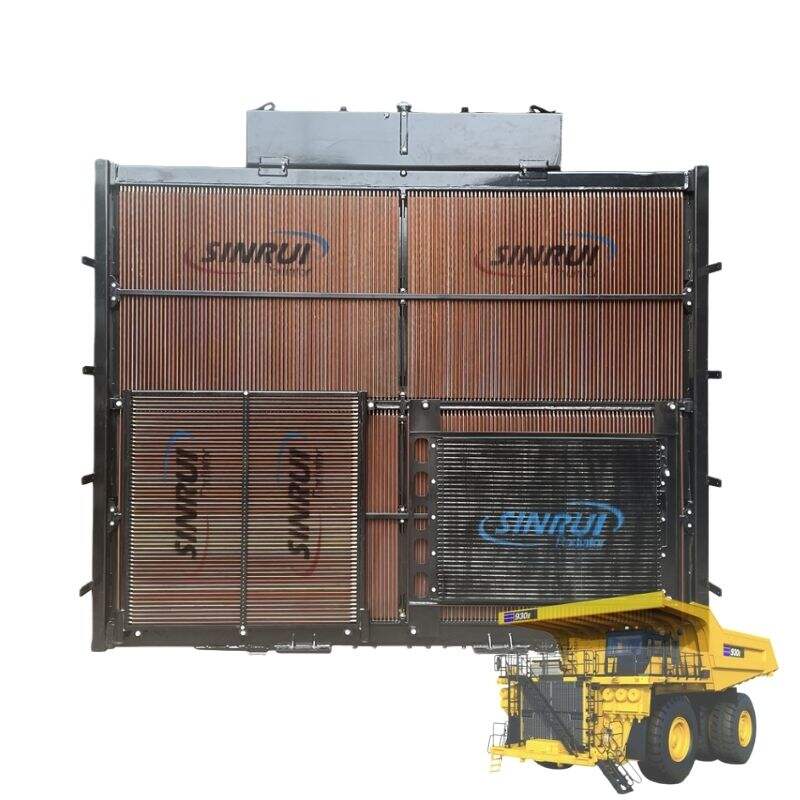
The mining equipment has to deal with really harsh heat situations that are among the worst in all heavy industries. Think about those haul trucks working nonstop for 24 hours straight down in deep pit mines where they generate over 2 megawatts of heat energy at times - enough power to run around 1,500 average homes at once. Radiator systems need to handle all sorts of challenges including blistering ambient temps hitting over 50 degrees Celsius in desert mining zones, massive swings in heat load when going uphill versus downhill (sometimes changing by 30% or more), plus dealing with tight underground spaces that limit airflow options. Dust buildup is another big problem since it cuts down on cooling efficiency by roughly 18 to 22 percent according to various industry reports. And remember each haul truck moves approximately 400 tons per hour of rock containing valuable minerals. The best fin-tube designs keep coolant temps under control, staying below 95 degrees Celsius even when everything's running flat out, which stops vapor lock issues and protects expensive components from blowing up unexpectedly.
Thermal efficiency degradation thresholds: empirical data from haul truck duty cycles
Twelve-month field monitoring across copper and iron ore operations reveals consistent patterns of thermal efficiency decay in mining radiators under sustained high-load operation:
| Operating Hours | Avg. Efficiency Loss | Primary Degradation Factor |
|---|---|---|
| 0–2,000 | <5% | Fin surface dust adhesion |
| 2,000–5,000 | 5–12% | Micro-fractures from thermal cycling |
| 5,000+ | 12–18% | Coolant-side scaling accumulation |
When efficiency drops past 22%, things start going south fast. Coolant temps hit dangerous levels around 110°C during those tough uphill climbs, which is why so many engines seize up in mining operations. Most experts recommend starting maintenance checks when degradation hits about 15%. This early intervention keeps machines running safely and cuts down on expensive downtime. The Ponemon Institute found fleets could save roughly $740,000 a year just by following this approach. Looking at the numbers from infrared testing shows something interesting too. Those ceramic coated fins actually maintain about 7% better heat transfer capability after 8,000 hours in service compared to regular ones. Makes sense why they're becoming standard equipment for companies wanting to extend equipment life without constant repairs.
Rugged Construction: Vibration, Abrasion, and Corrosion Resistance in Mining Radiators
Vibration resilience: ISO 5019-compliant mounting and core retention under 12G off-road shock loads
The radiators used in mining operations deal with constant shaking as massive haul trucks rumble over rough, rocky ground day after day. Mounting systems that meet ISO 5019 standards come equipped with special flexible isolators and strong core retention brackets. These components help keep everything intact even when subjected to shock loads equivalent to 12 times normal gravity. Compared to older models, these improved systems cut down on tube fatigue failures by around two thirds, which means fewer coolant leaks and no more core separations causing headaches for maintenance crews. For those working in hard rock mines specifically, this upgrade typically adds almost three extra years before replacement becomes necessary. The reliability boost makes all the difference in pit conditions where rocks constantly hit equipment and sudden impacts happen regularly throughout operations.
Abrasion and corrosion resistance: ceramic-coated fins vs. polymer-impregnated aluminum in slurry-laden airstreams
When slurry filled air moves through radiators, it really speeds up the wear on those core components, which means we need special materials to handle this problem. Ceramic coated fins actually stand up to erosion about 40 percent better than regular aluminum when dealing with all that silica dust. These coated fins keep transferring heat efficiently even after running for well over 12 thousand hours straight. For places where mines produce acidic atmospheres, polymer impregnated aluminum works wonders against corrosion. Tests show these materials cut down on pitting issues by nearly 57% under harsh conditions. Real world tests at copper mining operations have confirmed what lab results suggested: ceramic coatings work best in dusty dry environments, whereas polymer treated versions perform better where there's both chemical aggression and humidity present. The bottom line is that these coating technologies make radiator replacements happen roughly 300 to 500 hours later compared to traditional uncoated cores, saving time and money in maintenance schedules.
Optimized Core Design for Dust, Heat, and Field Serviceability in Mining Radiators
Fin density and tube geometry trade-offs: 14–18 FPI for dust-loaded airstreams and thermal recovery
Mining operations where dust is everywhere require careful consideration of fin density to strike the right balance between cooling effectiveness and avoiding blockages. Around 14 to 18 fins per inch seems to work best for transferring heat while keeping dust from accumulating too much. This beats out the higher density options above 18 FPI that tend to get plugged up quickly and restrict air flow. What's interesting is that these less dense configurations can still maintain about 92% heat rejection capability even when facing dust levels as high as 200 grams per cubic meter something haul trucks often deal with daily. Giving tubes more space apart (about 7 to 9 millimeters) helps prevent clogging problems too. Combine this wider spacing with ceramic coated aluminum fins and there are noticeable improvements in how well they resist wear and tear. Field tests conducted in Australian iron ore mines back this up showing service intervals last roughly 40% longer compared to older design approaches.
Removable-tube architecture for rapid field service: <45-minute modular replacement validated in Chilean copper operations
The modular design with removable tubes has completely changed how radiators are maintained at remote mines. Instead of taking apart the whole core, technicians can replace individual tubes now, which brings downtime down to around 45 minutes max. We've seen this work well in 12 different copper mines throughout Chile where temperatures regularly hit 50 degrees Celsius and the slurry conditions would normally wreck equipment faster. What makes this system stand out is the special compression seal that holds up against those intense 12G vibrations during transport and still lets workers fix things with just one tool. According to the Mining Maintenance Journal from last year, companies save roughly $18k each year on maintenance costs per unit, and their equipment stays operational about 98.5% of the time. The biggest advantage though? Technicians don't need to remove the radiator from the vehicle when doing repairs. For mining operations stuck dealing with long delivery times and tough logistics, being able to fix problems right there on site makes all the difference in keeping production going.
FAQ
What causes thermal efficiency degradation in mining radiators?
Thermal efficiency degradation is primarily caused by fin surface dust adhesion, micro-fractures from thermal cycling, and coolant-side scaling accumulation.
How does radiator design help in high-dust mining environments?
In high-dust environments, a fin density of 14–18 fins per inch helps maintain cooling efficiency while preventing dust buildup. Wider spacing between tubes also aids in reducing clogging.
What are the benefits of ceramic-coated fins in mining radiators?
Ceramic-coated fins offer enhanced resistance to erosion, maintaining heat transfer efficiency even after extended operation periods, particularly in dusty environments.
How does the removable-tube architecture benefit radiator maintenance?
The removable-tube architecture allows for rapid radiator maintenance by enabling technicians to replace individual tubes without removing the entire core, significantly reducing downtime.