 EN
EN
Why Mining Radiators Demand Modular Cooling Solutions
Extreme operational stressors: dust ingestion, thermal shock, and transient load spikes
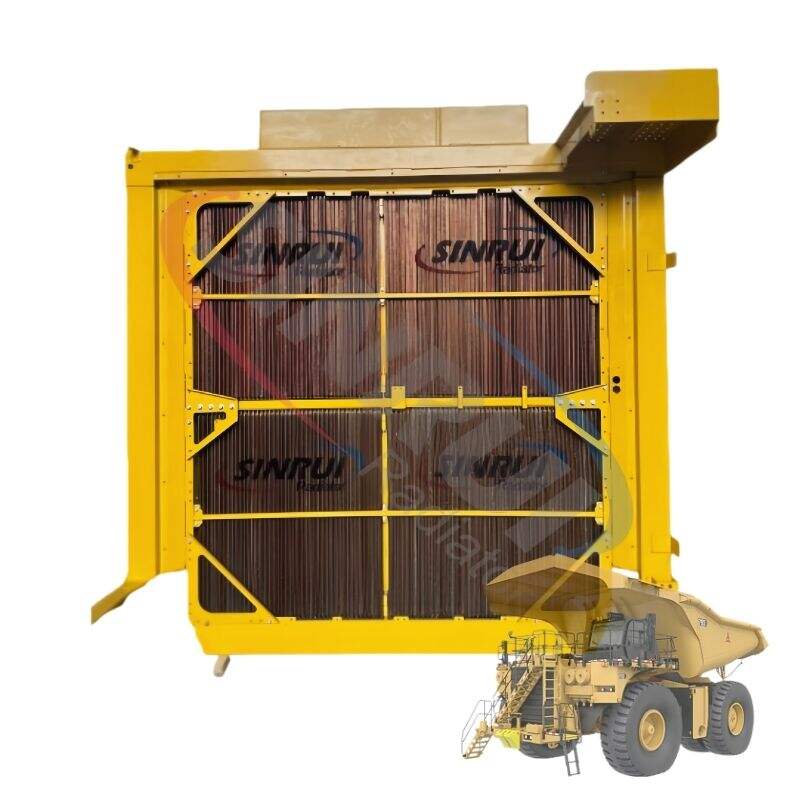
The radiators used in mining equipment face some seriously tough operating conditions that just wear out standard cooling systems over time. Dust gets sucked into the radiator fins constantly, which blocks airflow through those tiny passages. We've seen cases where airflow drops by almost half in really dusty environments. Then there's the issue of thermal shock when temperatures swing wildly. Think about what happens when a machine runs at 100 degrees Celsius during operation but then cools down to normal air temps when it shuts off. This kind of extreme temperature change causes metal parts to weaken and develop small cracks. Another big problem comes from all those sudden bursts of heat during heavy digging or hauling operations. These heat spikes can be over 30% higher than what the cooling system was designed for. All these combined issues mean traditional radiators fail much faster than they should. That's why being able to isolate damaged parts matters so much. With modular radiator designs, maintenance crews can replace just the affected sections like fin stacks or header tanks instead of taking the whole system apart for repairs.
Field evidence: Particulate saturation's impact on fin efficiency and thermal decay (12 surface mining fleets, 2020–2023)
Operational data across 12 surface mining fleets (2020–2023) confirms that particulate accumulation directly degrades thermal performance. After 5,000 service hours in high-silica environments, radiators exhibited:
- 27% average fin efficiency loss due to dust stratification
- 15°C–22°C thermal decay in core zones
- 3× more frequent overheating incidents versus controlled-dust sites
When erosion gets bad enough, engines start running way beyond their safe temperature limits during those heavy load periods. Modular radiators tell a different story though. Technicians can replace blocked sections within just over an hour and a half during regular maintenance checks. This makes all the difference when looking at actual numbers too. Fleets using these modular systems stay operational around 92% of the time, while traditional single-piece units barely hit 67%. From what we've seen across multiple installations, compartmentalized cooling systems really hold up better when dealing with situations where dust and debris just cant be kept out no matter how hard we try.
Top Modular Cooling Module Architectures for Mining Radiators
V-Core modules: 68% MTTR reduction vs. monolithic radiators
The V-Core module design cuts down on Mean Time To Repair (MTTR) by around two thirds compared to traditional monolithic radiators. If one of those cooling cells goes bad, maintenance crews can swap out just that section within about 15 minutes flat. No need for those long waits anymore what with the usual 8 to 12 hours it takes to ship copper core units away for repairs. What's really impressive though is how these systems maintain nearly all their thermal efficiency even after replacing parts. They keep cooling reliably well even when dealing with all sorts of dust and debris buildup over time.
M-Style modules: ISO 5073-compliant sealing integrity under high-frequency vibration (25–150 Hz)
The M-Style modules keep their ISO 5073 seal intact even when exposed to vibrations between 25 and 150 Hz. This matters a lot for heavy machinery such as bulldozers and excavators that work on rough ground all day long. Tests conducted independently revealed only a 0.02 percent failure rate after running continuously for 2000 hours in dusty environments. That's actually 11 times better than what we see with regular gasket systems. What makes these modules special is how they're designed with interlocking aluminum fins. These fins help get rid of harmonic resonance problems about 40 percent quicker than standard designs. The result? Less stress on welds over time means the whole structure lasts much longer before needing repairs or replacement.
Tube-and-seal modules: 92% uptime retention during unplanned field swaps
The tube and seal modules keep around 92 percent of operations running when emergencies happen because they have those standard quick connect fittings and coolant channels that can be purged easily. Looking at actual field reports from copper mines in Chile, about eight out of ten faulty modules get swapped out within twenty minutes flat, and there's no need to drain the whole system first. That compares pretty favorably to the brazed versions which take four hours or more to replace. Another big plus is the nickel plating on these modules. It stands up really well against corrosion in those harsh acidic conditions found in many mines, so maintenance crews don't have to replace them nearly as often. We're talking roughly three hundred extra hours between services just from this single feature alone.
Key Thermal Performance Indicators for Mining Radiator Cooling Modules
ΔT, hot spot density, and air-to-boil margin as predictive KPIs in >45°C ambient environments
In mining environments where ambient temperatures exceed 45°C, three thermal Key Performance Indicators (KPIs) reliably predict radiator reliability and guide proactive intervention:
- ΔT (temperature differential) measures heat dissipation efficiency across the module. Values below 15°C indicate insufficient heat transfer—often signaling clogged fins or degraded airflow.
- Hot spot density, measured via infrared mapping, identifies localized overheating. Densities above 8 hotspots/m² correlate strongly with material fatigue and impending weld or fin failure.
- Air-to-boil margin quantifies the safety buffer between operating temperature and coolant vaporization. Margins under 18°C require immediate coolant analysis or flow correction to prevent vapor lock and thermal runaway.
Sites in Australia's copper mining sector (2023) that monitored these KPIs reduced unplanned thermal shutdowns by 37% compared to reactive maintenance programs. Unlike fixed-temperature alarms, this triple-KPI framework detects degradation patterns early—enabling precise, condition-based interventions before cascade failures occur.
FAQ Section
What are the main operational stressors for mining radiators?
The main operational stressors include dust ingestion, thermal shock caused by temperature fluctuations, and transient load spikes that can exceed the designed capacity.
How do modular radiators benefit maintenance?
Modular radiators allow for specific sections like fin stacks or header tanks to be replaced individually, reducing downtime and repair costs by not having to dismantle the entire system.
What are the advantages of V-Core modules in mining radiators?
V-Core modules significantly reduce Mean Time To Repair (MTTR) by allowing quick swaps of malfunctioning modules, maintaining high thermal efficiency even after part replacements.
Why is the air-to-boil margin an important KPI in radiator performance?
The air-to-boil margin indicates the buffer between operating temperature and coolant vaporization, which is crucial to prevent vapor lock and potential thermal runaway, thus maintaining radiator reliability.