 EN
EN
Why Standard Radiators Fail in Mining Applications
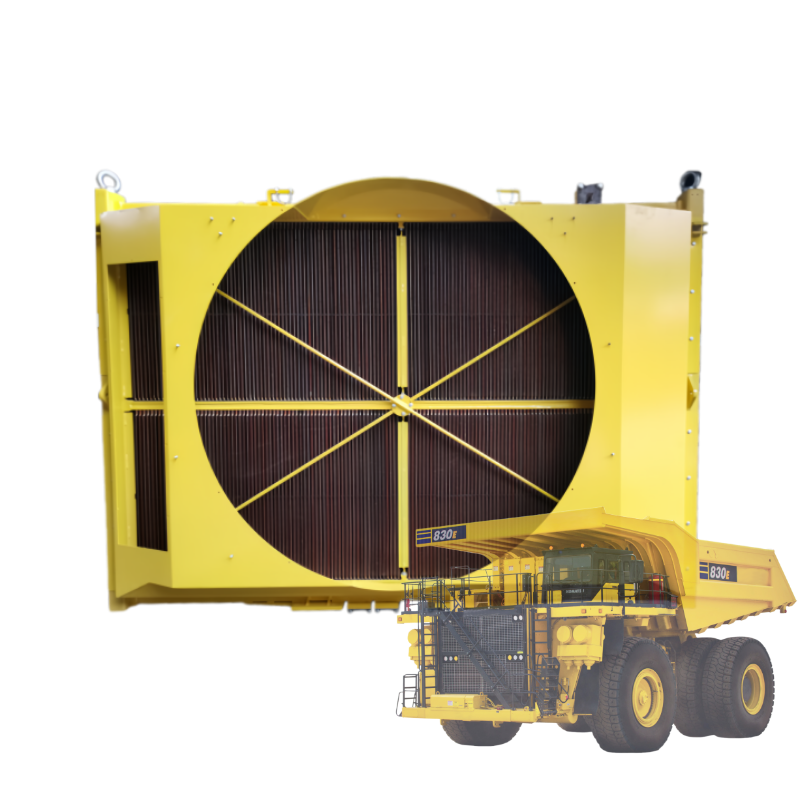
Regular radiators made for highway trucks or fixed industrial gear just don't cut it in mining conditions because they face three major problems all at once: dirt buildup from dust, constant shaking, and wild temperature swings. Mines throw out tons of abrasive particles, sometimes over 500 milligrams per cubic meter air space, which is like ten times what we see in normal factories. This stuff gets stuck fast in those standard radiator fins. Airflow gets blocked, and coolant temps jump anywhere from 15 to 25 degrees Celsius hotter within just a few weeks. The rough ground causes nonstop high frequency vibrations that wear down the solder points in copper brass cores and can tear apart seams in aluminum models. On highways, engines run pretty predictably, but mining engines go through crazy temperature changes again and again as they switch from sitting idle to full power operation. This back and forth stresses materials and creates tiny cracks in thin walled tubes that eventually lead to small leaks. All these issues together mean unexpected breakdowns that can cost companies around seven hundred forty thousand dollars every single hour according to some studies from 2023. That's why only specially built mining radiators work properly in these tough environments. These need extra strong construction, protection against harsh conditions, and testing specifically for mining applications to handle all these different failure points.
Calculating Required Cooling Capacity for Your Mining Radiator
Converting Engine kW Output to BTU/h Requirements
Begin by converting engine power output into heat rejection demand. Every kilowatt (kW) of engine power generates approximately 3,412 BTU/h of waste heat. For mining applications—with added thermal loads from hydraulics, transmissions, and auxiliary systems—apply a safety factor of 1.2–1.3:
Required BTU/h = Engine kW × 3,412 × Safety Factor (1.2–1.3)
For example:
| Engine Power | Base BTU/h | Adjusted BTU/h (1.25×) |
|---|---|---|
| 300 kW | 1,023,600 | 1,279,500 |
| 500 kW | 1,706,000 | 2,132,500 |
Applying Derating Factors: Altitude, Dust Load, and Continuous Duty Cycle
Mining conditions significantly reduce radiator efficiency. Three key derating factors must be applied sequentially:
- Altitude: Above 1,500 meters, air density declines ~1% per 100 meters—reducing heat dissipation. At 3,000 m, apply a 15% derate.
- Dust Load: Fin clogging degrades performance by 15–25%. Radiators with ≤8 FPI (fins per inch) and integrated automated cleaning systems mitigate this loss.
- Continuous Duty: 24/7 operation demands greater thermal margin. Standard radiators rated for intermittent use require 20% additional capacity for non-stop service.
Final Required Capacity:
Adjusted BTU/h = Base BTU/h × (1 + Altitude Derate %) × (1 + Dust Derate %) × (1 + Duty Cycle %)
Example: A 500 kW engine operating at 2,000 m (10% altitude derate) under heavy dust (20% derate) and continuous duty (20% derate):
2,132,500 × 1.10 × 1.20 × 1.20 = 3,373,560 BTU/h
Selecting the Right Mining Radiator Design and Materials
Aluminum vs. Copper-Brass: Vibration Resistance, Corrosion Tolerance, and Weight Trade-offs
Material choice directly impacts service life in mining applications. While copper-brass offers ~25% higher thermal conductivity than aluminum, its advantages are outweighed in mobile mining equipment by aluminum's superior durability:
- Vibration resistance: Aluminum cores withstand chassis flex from uneven terrain 40% better than copper-brass, based on OEM field testing across articulated haulers and hydraulic excavators.
- Corrosion tolerance: Aluminum forms a self-healing oxide layer, offering improved resistance to acidic runoff and sulfide-laden atmospheres common near tailings ponds.
- Weight savings: Aluminum systems weigh ~30% less—reducing fuel consumption and improving payload efficiency in mobile rigs.
Copper-brass remains appropriate for stationary crusher cooling where thermal shock resistance is paramount and vibration exposure is minimal. Selection should prioritize operational context—not conductivity alone.
Core Configuration and Fin Density Optimization for High-Dust Environments
In high-particulate environments, core geometry is as critical as material. Dense automotive-style fins (8–10 FPI) clog rapidly; instead, single-row cores with wider fin spacing (≥3 mm / 4–6 FPI) maximize long-term airflow retention while enabling effective cleaning. Field data from five Tier 4 mining fleets confirm:
| Configuration | Airflow Retention (500 hrs) | Cleaning Frequency |
|---|---|---|
| Dense Fins (8–10 FPI) | <45% | Weekly pressure wash |
| Optimized Fins (4–6 FPI) | >82% | Bi-monthly maintenance |
Lower fin density also reduces erosion risk and supports integration of sacrificial anodes to combat electrolytic corrosion. Angled mounting further enhances passive dust shedding during operation. Oversizing for “extra capacity” is counterproductive—it increases sediment trapping and reduces flow velocity, accelerating wear.
Avoiding Common Matching Pitfalls with Mining Radiators
Oversizing Risks: Reduced Flow Velocity, Sludge Accumulation, and Thermal Shock
When radiators are made too big for their application, they actually create several problems that most standard sizing calculations just don't account for. Let's start with what happens when there's too much space inside the radiator core. The coolant moves too slowly through these oversized systems, dropping below 0.5 meters per second. At those speeds, dirt and grit in the fluid settle out instead of staying suspended, forming sludge deposits on the tubes. According to research from ASHRAE, this kind of buildup can cut down on heat transfer efficiency by almost half in some cases. Another issue comes from those areas where coolant flow is particularly weak. These spots become breeding grounds for sediment buildup which leads to faster clogging of tubes and creates little pockets of corrosion damage, especially noticeable in aluminum radiators. Oversized units also carry more thermal mass, which makes things worse when cold coolant flows back into hot engine components after sitting idle. We've seen field reports where temperature differences over 120 degrees Fahrenheit actually started tiny cracks in radiator cores, based on recent failure analyses from original equipment manufacturers in 2023. Getting the right size radiator matters because it keeps coolant moving fast enough (>1.2 m/s) to keep contaminants circulating rather than settling, and helps manage those sudden temperature changes that happen all the time in real world operation.
Mounting and Airflow Integration: Ensuring Real-World Performance Matches Calculated Capacity
Even a correctly sized radiator underperforms without proper installation. Mining-specific mounting addresses two primary challenges:
- Vibration isolation: Flexible mounts must absorb 15–20 Hz harmonic frequencies generated by drilling, crushing, and hauling—preventing fatigue-induced tube fractures, particularly in copper-brass cores.
- Airflow integrity: Shrouding must be fully sealed—field testing shows just 5 mm of unsealed gap causes 30% airflow loss. In high-dust settings, maintain 0.8–1.2 inch water column static pressure across the core to ensure airflow penetrates particulate layers. Radiators should be positioned away from exhaust recirculation zones and equipped with angled deflectors to direct clean air across the core face. Crucially, inlet/outlet ΔT must be validated during full-load operation: 25% of underperforming units trace their issues to airflow or mounting flaws—not design deficiencies.
Frequently Asked Questions (FAQ)
Why do standard radiators fail in mining applications?
Standard radiators fail due to dirt buildup, constant vibrations, and temperature fluctuations in mining environments that lead to stress and damage.
How do you calculate the cooling capacity required for mining radiators?
You convert engine power output from kW to BTU/h considering safety factors, derating factors like altitude, dust load, and continuous duty cycles.
What are the material considerations for mining radiators?
Aluminum is preferred over copper-brass in mobile mining equipment due to better vibration resistance, corrosion tolerance, and weight savings.
How does fin density affect mining radiator performance?
Optimizing fin density improves airflow retention and reduces maintenance frequency in high-dust environments.
What are the risks of oversizing a mining radiator?
Oversizing can lead to reduced flow velocity, sludge accumulation, and thermal shock, impacting efficiency and causing damage.